
Washington is hosting an unprecedented, U.S.-brokered exchange between Lebanon and Israel officials today — a cautious diplomatic opening intended to halt active bombardment, define a pathway toward a ceasefire, and test whether state-to-state engagement can begin to fill the vacuum left by years of proxy warfare and weakened institutions.
Current diplomatic moment: aims, actors, and immediate dynamics
The meetings in Washington are being conducted indirectly through each country’s ambassador to the United States and aim primarily to create a framework for stopping the Israeli bombardment of Lebanon and establishing follow-on negotiations. Lebanon pressed for direct engagement early in the escalation; Israel initially rejected the proposal and later relented after diplomatic pressure tied to a short ceasefire proposal and broader U.S.-Iran engagement. The talks are narrowly focused and preparatory: Israeli officials are not expected to accept an immediate ceasefire today, while Beirut seeks to secure a durable halt to hostilities as a minimum precondition for further steps.
On the ground, hostilities remain intense. Israeli forces continue operations in southern Lebanon, concentrating on tactical objectives such as consolidating positions around Bint Jbeil, while Hezbollah continues rocket and asymmetric operations into northern Israel. The humanitarian toll in Lebanon is high — official and reporting estimates place Lebanese deaths in the thousands — and domestic pressure on Beirut to reassert authority is acute. Hezbollah opposes entering talks while Lebanese territory remains under attack, viewing engagement as politically risky and potentially conceding leverage to Israel. The Lebanese government, by contrast, frames talks as necessary to restore sovereignty and begin processes—potentially including disarmament of non-state actors—that would take years rather than weeks.
Historical precedents: the long shadow of conflict and diplomatic patterns
These talks occur against an eighty-year backdrop in which Lebanon and Israel have technically remained in a state of war since 1948, interspersed with intermittent battles, invasions, and negotiated pauses. Past patterns show that ceasefires and arrangements along the Israel-Lebanon frontier have often been fragile: UN-sourced security arrangements and U.N. Interim Force in Lebanon (UNIFIL) deployments after 2006 reduced large-scale conventional fighting but did not eliminate cross-border raids, proxy campaigns, or the entrenchment of armed non-state actors.
Lebanon’s fissured political architecture and the emergence of Hezbollah as a dominant military and political force trace back to civil-war-era realignments and the broader Arab-Israeli refugee and displacement crises. Israel’s strategic doctrines have, at times, aimed to push its northern boundary outward to natural barriers such as the Litani River; such aims resurface periodically during escalations and reflect long-standing security anxieties. Historically, third-party mediation—most prominently by the United States, European states, and the United Nations—has been crucial to move parties to temporary cessation, but durable settlement has consistently been hampered by regional rivalries, especially Iran’s relationship with Hezbollah and competing domestic political calculations in Beirut and Jerusalem.
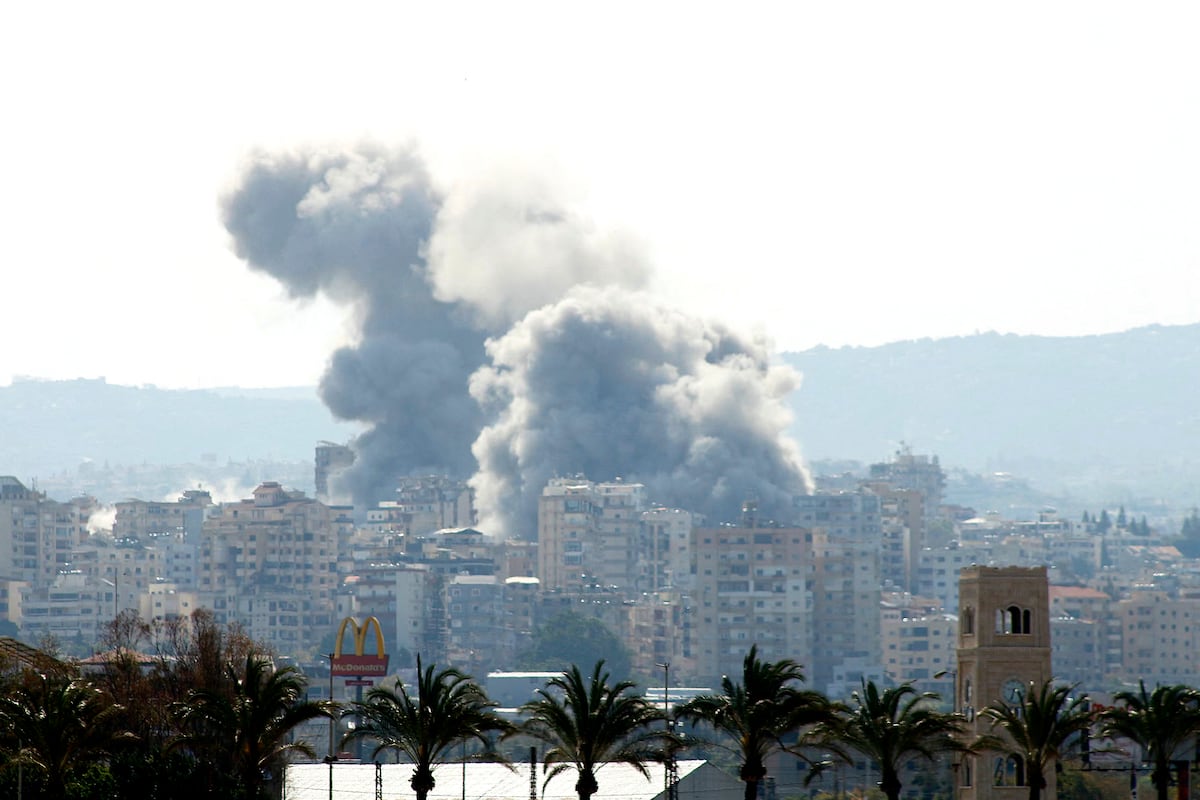
Caption: Smoke rises near the coastal city of Tyre following an airstrike amid the latest escalation | Credits: Kawnat HAJU / AFP via Getty Images
Geopolitical ramifications: escalation pathways and regional calculations
The Washington talks are politically consequential beyond their immediate objective of a ceasefire. Success would validate U.S. mediation capacity and could rebalance Lebanese politics by strengthening state institutions at Hezbollah’s expense — a result Tehran would likely resist. Failure, or a perceived diplomatic loss for Beirut, could deepen internal fragmentation, embolden hardliners on all sides, and increase the probability of prolonged low-intensity conflict or periodic spikes that draw in regional patrons.
Regionally, the negotiations intersect with wider Iran–U.S. competition. Iran’s influence over Hezbollah gives it de facto veto power over any outcome that reduces the militia’s autonomy; Tehran’s posture will therefore shape how far Lebanon’s government can push for disarmament or restrictions on cross-border operations. For Israel, the talks are a diplomatic hedge: seeking to constrain immediate threats while retaining military options to shape a longer-term security environment, including aspirations to move the de facto northern border closer to the Litani River. That goal, if pursued, would significantly raise the stakes and risk broader regional escalation.
International actors face trade-offs: pushing too hard for a rapid settlement could produce a brittle deal that collapses under renewed violence; conversely, accepting protracted talks without security guarantees risks normalizing continued bombardment and humanitarian catastrophe. Practically, any durable outcome will require parallel measures: a credible ceasefire mechanism, strengthened international monitoring (including an empowered UNIFIL or similar force), tangible steps to bolster Lebanese state capacity and public services, and calibrated diplomatic engagement with regional stakeholders—above all Iran—to reduce incentives for Hezbollah to resume large-scale operations.
In the near term, Washington’s role as convener gives it leverage to shape the agenda, but converting talks into a sustainable resolution will demand patient, multilateral diplomacy and mechanisms that can withstand both battlefield shocks and domestic political pressures inside Lebanon and Israel.