
New Zealand’s appointment of Chris Penk as minister of defense coincides with a deliberate acceleration of military integration with Australia and a broader expansion of Wellington’s defense posture — a shift that seeks to reconcile New Zealand’s traditional sovereignty sensibilities with the operational benefits of tighter interoperability in an increasingly contested Indo‑Pacific security environment.
Operational snapshot: The integration initiative and immediate dynamics
Wellington and Canberra have moved from loose cooperation toward an explicit program of embedding personnel, synchronized training, and shared capability development aimed at producing an interoperable, interchangeable force by 2035. This effort includes Australian and New Zealand officers occupying senior positions across each other’s command structures, Royal New Zealand Air Force elements operating under Australian call signs while embedded in Royal Australian Air Force units, and formalization of cross‑force procedures that permit surge and mutual support in crises.
Chris Penk’s elevation to defense minister — notable because of his prior service with both New Zealand and Australian forces — gives the initiative an institutional champion with personal experience of bilateral military cultures. The NZDF’s internal metrics reflect a readiness push: recruiting timelines have been shortened substantially and Defence Chief Tony Davies has publicly warned the force must be able to expand “significantly and quickly.” Budget trajectories also point upward, with spending slated to rise from roughly 1% of GDP toward a 2% target over several years, though domestic politics and an approaching election complicate the certainty of that increase.
Historical foundations: ANZAC ties, evolving postures, and New Zealand’s broader outreach
Australia and New Zealand share a century of military cooperation rooted in the ANZAC tradition, institutional links, and frequent joint deployments. That legacy provides both the political language and the practical templates for deeper integration. Post‑Cold War shifts, regional power shifts in the Indo‑Pacific, and Beijing’s growing engagement with Pacific island states have combined to push Wellington toward more robust defense arrangements with like‑minded partners.
Concurrently, New Zealand has diversified its defense diplomacy — exemplified by a newly resident defence adviser in New Delhi and an India‑New Zealand defence cooperation memorandum — signaling a willingness to couple ANZ relations with broader bilateral ties in Asia. These developments reflect a pragmatic expansion of influence while attempting to preserve New Zealand’s sovereign decision‑making and distinct legal and political constraints on force employment.
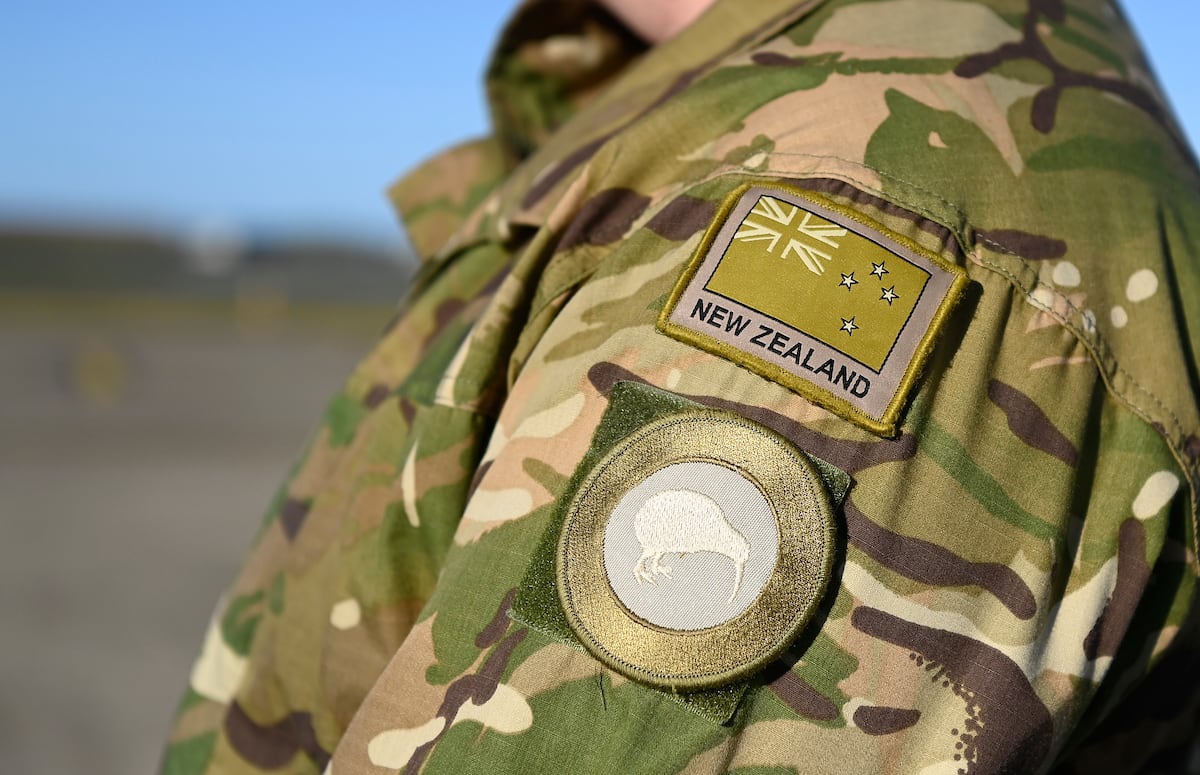
Caption: A New Zealand Defence Force member deployed with Australian units as part of deeper bilateral integration exercises | Credits: Ian Hitchcock/Getty Images
Strategic implications: Regional balance, risks, and policy considerations
Deeper NZ‑Australia military integration will strengthen collective readiness and provide reciprocal force multipliers in the southern Indo‑Pacific, improving crisis response, maritime domain awareness, and combined power projection. For the United States and other partners, the integration offers more predictable burden‑sharing and operational architecture for multilateral contingencies.
However, closer military alignment carries notable risks. Domestically, New Zealand must manage public perceptions about sovereignty and independent foreign policy, particularly given the nation’s historical caution about entanglement. Politically, planned defense spending increases face electoral volatility that could delay procurement and capacity expansions, undermining interoperability timelines.
Regionally, Pacific island states will scrutinize Wellington’s moves: deeper ANZ integration may reassure some partners but could also be perceived as securitization of the neighborhood, complicating relationships where China remains active politically and economically. Operationally, integration increases dependencies — on common logistics, compatible platforms, and synchronized command systems — which create vulnerabilities if political will or budgets diverge.
To maximize strategic gain while mitigating risk, New Zealand should: maintain clear legal and political guardrails that preserve sovereign decision rights; pursue interoperability through modular, reversible arrangements that protect national control over forces; accelerate targeted investments in recruit throughput and sustainment to meet expansion goals; and sustain diplomatic engagement with Pacific islands and Asian partners so integration is seen as enabling regional security, not narrowing New Zealand’s independent voice.