
A recent Ukrainian intelligence assessment, reviewed by international media, alleges that Russia has provided Iran with targeted satellite imagery and cyber assistance to refine strikes against U.S. and allied facilities across the Middle East. The pattern described—repeated overflights of regional sites followed closely by Iranian missile and drone attacks, combined with documented interactions between Russian and Iranian hacking groups—suggests a coordinated intelligence and technical partnership that raises acute strategic, operational, and legal questions for regional security and great‑power competition.
Current Assessment of Alleged Russian Support to Iran
Open-source and allied analyses indicate that Russian satellites conducted multiple imagery passes over military bases, civilian airports, energy infrastructure, and chokepoints in the Gulf during a focused window in late March. According to the reviewed assessment, dozens of surveys across at least 11 countries preceded a series of Iranian strikes, creating a temporal and spatial correlation that intelligence services interpret as more than coincidental. Sources also report a dedicated communications channel between Moscow and Tehran for exchanging imagery and targeting information, potentially augmented by on‑the‑ground Russian intelligence personnel in Iran.
Concurrently, cyber activity attributed to Iranian actors has intensified, with evidence of technique sharing and operational coordination with Russian-linked hacking groups. Patterns include publicized warnings of cyber operations, release of access credentials, domain registrations using Russian infrastructure, and the use of techniques consistent with Russian military cyber tradecraft. Taken together, the imagery and cyber threads point to a multi‑domain assistance model: space‑based reconnaissance to identify and assess targets, layered with cyber activity to disrupt, degrade, or enable kinetic effects.
Origins and Evolution of Moscow‑Tehran Military Cooperation
Moscow and Tehran have incrementally strengthened security ties since Russia’s 2022 invasion of Ukraine, moving from transactional arms and technology exchanges to a more institutionalized partnership. Formal agreements signed by the two capitals emphasize intelligence cooperation and mutual security assistance, creating a framework for the type of operational support now alleged. Previous episodes—such as Iran’s supply of drones to Russian forces and reciprocal procurement or technology transfer—set a precedent for cross‑domain collaboration that now appears to extend into space and cyber arenas.
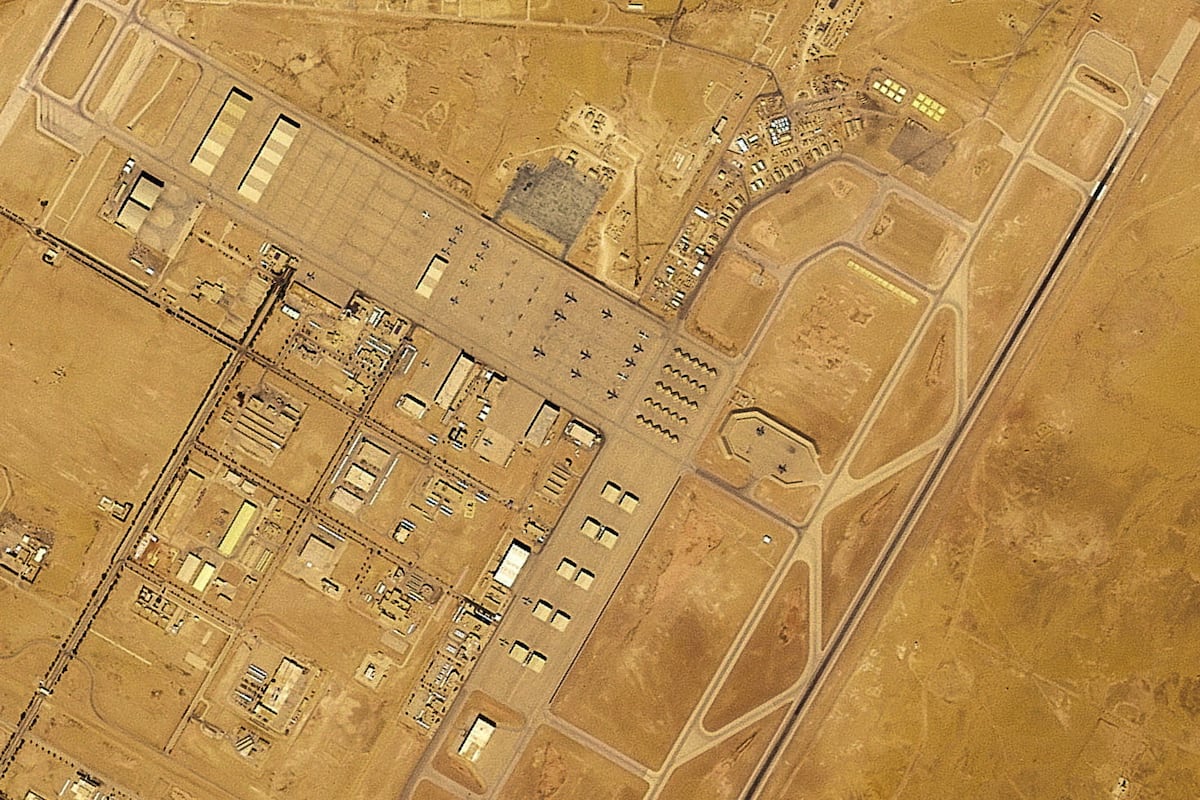
Caption: Satellite imagery of Prince Sultan Air Base, a site later struck amid regional hostilities, illustrating the type of data reportedly collected and shared. | Credits: (2026 Planet Labs PBC/Handout via Reuters)
Strategic and Operational Implications for the Region and Beyond
If the assessment is accurate, the combined use of spaceborne reconnaissance and cyber collaboration materially increases Iran’s ability to conduct timely, precise attacks while complicating allied responses. The sharing of imagery shortens the sensor-to-shooter cycle, improving target selection and battle damage assessment; cyber cooperation can amplify physical effects by degrading air defenses, communications, or critical infrastructure before—or after—kinetic strikes. This multi‑domain synergy raises the operational stakes for U.S. and partner forces based in the Gulf and for states whose infrastructure and commerce traverse maritime chokepoints like the Strait of Hormuz.
Geopolitically, such cooperation allows Russia to project influence and strategic friction beyond its immediate theaters, using Iran as a complementary lever to challenge U.S. regional posture and to divert attention from other fronts. For Iran, access to Russian satellite imagery and cyber tradecraft enhances deterrent and coercive options against regional adversaries. For Western and regional policymakers, attribution challenges—given the plausibility of plausible deniability in both space and cyber—will complicate proportional responses and collective decision‑making within alliances.
Practically, this dynamic suggests several near‑term consequences: increased demand for hardened, multi‑layered missile defenses and cyber resilience by Gulf states; intensified intelligence‑sharing and counterspace awareness among NATO and regional partners; potential diplomatic or economic measures targeting identified facilitation channels; and elevated emphasis on norms and confidence‑building measures for responsible behavior in space. Long term, persistent cooperation of this sort could erode existing restraints on cross‑border intelligence support and normalize the use of dual‑use space and cyber capabilities in state‑sponsored proxy campaigns, raising the risk of escalation and miscalculation across multiple theaters.