
The U.S. announcement of a maritime blockade focused on Iran’s use of the Strait of Hormuz transforms a tactical posture into a strategic gamble: it seeks to blunt Tehran’s leverage over a critical global chokepoint but also risks prolonged naval commitment, regional escalation and sharp diplomatic fallout that could reshape alliances and global energy markets.
Immediate Situation Overview
The administration has directed U.S. forces to interdict shipping to and from Iranian ports in the Arabian Gulf and Gulf of Oman, with Central Command framing the measure as limited to vessels bound for or departing Iran. Public statements from national leadership, however, broaden the operational intent by threatening interdiction of ships that have paid transit “tolls” to Iran even when they are in international waters. That public posture creates ambiguity about rules of engagement and legal thresholds for boarding, seizure or kinetic action.
Operationally, an effective blockade of the Strait of Hormuz is resource-intensive. It requires sustained surface, subsurface and aerial presence to monitor traffic, identify targets, and enforce inspections or interdictions while mitigating asymmetric threats such as mines, swarming small boats, anti-ship missiles and unmanned systems. The United States has the capability to assemble such a force, but doing so on an open-ended basis will strain ships, logistics, and forward basing in an already contested theater — especially if partners do not contribute robustly. Equally consequential are hard questions about potential confrontations with vessels flying the flags of major powers or U.S. partners; boarding or attacking such ships would produce immediate diplomatic crises and could expand the conflict beyond the Persian Gulf.
Historical Precedents and Maritime Warfare Context
Maritime blockades and interdictions in the Persian Gulf have precedent but also carry lessons. In the late 1980s, U.S. escort operations during the Iran–Iraq tanker war (notably Operation Earnest Will) and the subsequent clash of 1988 showed how protection campaigns, mine warfare and direct strikes against Iranian assets can rapidly escalate. That period demonstrated the vulnerability of commercial shipping to mines and small-boat attacks and the consequent costs of sustained naval operations to secure sea lanes.
More recent episodes — including tanker seizures, reported attacks on merchant vessels and repeated Iranian threats to close or restrict transit through Hormuz — have underscored the Strait’s outsized strategic importance (roughly one-fifth of seaborne oil transits). International law traditionally treats blockades as acts that could amount to war if not enacted through a clear state of belligerency and with broad legal justification, which complicates unilateral enforcement. The interplay between naval power, economic coercion and diplomacy in prior decades highlights that sea-control operations without a political framework and allied buy-in tend to be prolonged and costly.
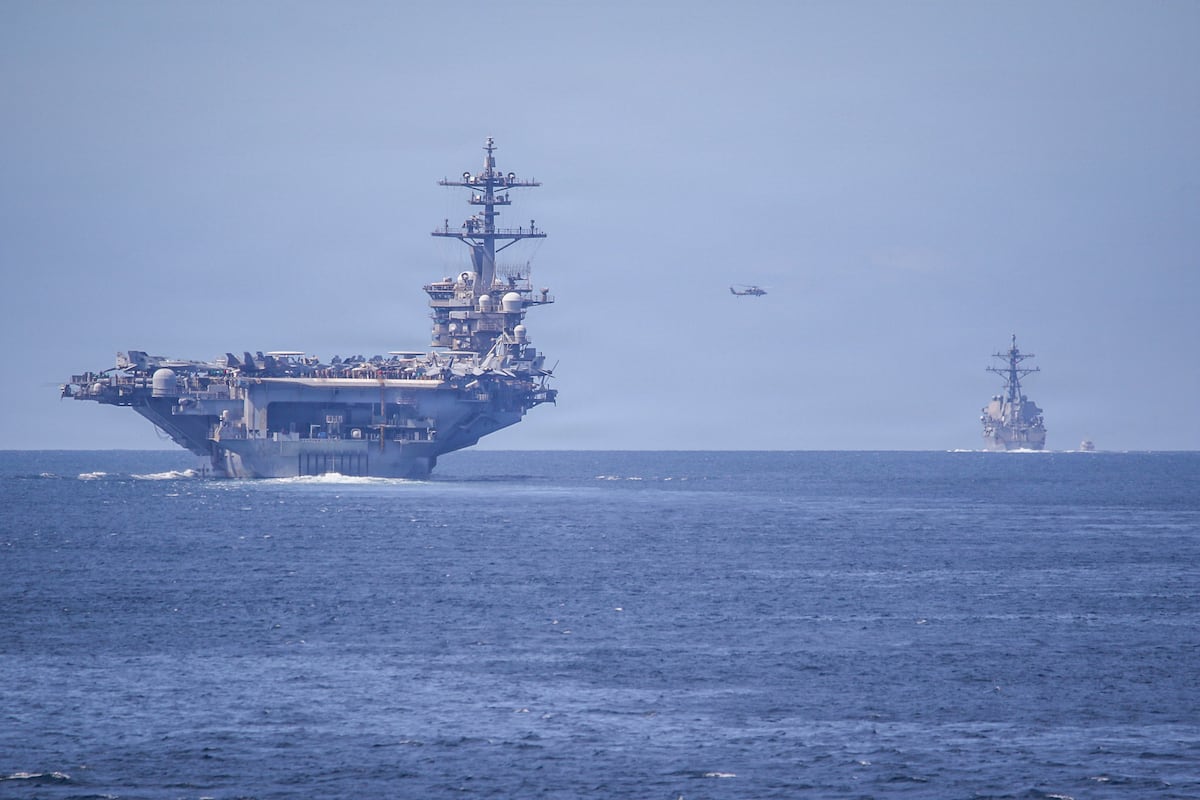
Caption: MH-60R Sea Hawk operating between carrier and destroyer in Gulf operations | Credits: MC3 Christian Kibler/US Navy
Broader Geopolitical Consequences and Risks
A blockade aimed at Iran recalibrates risk across multiple domains. Politically, it places Washington at legal and diplomatic risk: allies and neutral maritime nations will weigh the legitimacy of interdictions, and targeted commercial interests — from China to India and South Korea — could demand exemptions or retaliatory measures if their trade is disrupted. Economically, tighter controls and the specter of attacks have already driven oil price volatility; a protracted blockade would amplify supply uncertainty, incentivize strategic reserves releases, and pressure global economic growth.
Militarily, Tehran retains asymmetric options to raise the cost of enforcement: mines and stand-off anti-ship weapons can disrupt traffic and damage naval units; proxy strikes against Gulf partner infrastructure and commercial shipping could undermine basing and logistics; and operations in international waters create complex engagement dilemmas if third-country-flagged vessels are involved. For the U.S., sustaining continuous presence in the Gulf degrades surge capacity elsewhere and increases wear on critical platforms and crews.
Strategically, the measure risks pushing regional actors into recalibrated alignments. States hosting U.S. forces face exposure to retaliation; major powers whose trade routes are affected may seek diplomatic pathways to de-escalate or explore alternative security arrangements; and global institutions will be pressured to adjudicate the blockade’s legality. Absent a clear multinational coalition and a defined political end-state, the blockade is likely to convert a tactical lever into long-term strategic entanglement. The most feasible exit path remains diplomacy anchored in an international framework that reduces Iran’s incentive and ability to coerce maritime traffic while distributing enforcement burdens among key maritime stakeholders.