
A senior U.S. Indo‑Pacific commander has sharply underscored a simple strategic truth: Taiwan’s ability to deter coercion depends first on Taipei’s willingness to fund and field credible defenses. The public rebuke of parliamentary delays over a large defense package crystallizes a growing worry in Washington and Taipei alike — that political disputes at home could weaken deterrence at a moment of intensifying pressure from Beijing.
Current Situation: Budget Impasse, U.S. Pressure, and Domestic Politics
Taiwan’s government proposed a major augmentation of defense spending to counter a steadily more capable People’s Republic of China; that plan remains contested in the legislature where the opposition Kuomintang (KMT) holds a majority. Senior U.S. military leadership has warned that external security guarantees cannot substitute for Taiwan’s own investment in its defense forces. Washington has reiterated its statutory obligation to enable Taiwan’s self‑defense and congressional actors are preparing additional arms sale notifications, potentially totaling in the low tens of billions of dollars. At the same time, U.S. lawmakers have privately and publicly urged Taipei’s political leadership to approve a robust package, while receiving mixed assurances from KMT figures who assert support for defense but resist open‑ended expenditures and emphasize the need for cross‑Strait dialogue. Domestically, tensions between the ruling party’s push for rapid capability buildup and opposition caution over cost, oversight and diplomatic signaling have produced stalled deliberations and public friction, complicating Taipei’s next procurement steps.
Historical Background: Cross‑Strait Dynamics and Taiwan’s Defense Evolution
Since the split between Beijing and Taipei in the mid‑20th century, the island’s security posture has been shaped by the twin imperatives of deterring forcible takeover and sustaining international partnerships. U.S. policy frameworks — built around strategic ambiguity and legislation obligating arms provision — evolved as Beijing modernized its military and expanded missile, naval and airpower aimed at the Taiwan Strait. Over recent decades Taiwan shifted from preparing for symmetric conventional defense to emphasizing asymmetric measures: mobile coastal defenses, anti‑ship missiles, air‑defense networks and dispersed logistics aimed at raising the cost of any cross‑Strait operation. Political currents within Taiwan have repeatedly influenced procurement choices: parties favoring closer economic or political ties with Beijing have historically emphasized de‑escalation and restraint, while those prioritizing distinct Taiwanese identity have tended to accelerate defense spending and diversification of foreign partners. The present budget debate sits on top of that long arc — a reflection of domestic democratic contestation intersecting with a geopolitically fraught neighborhood.
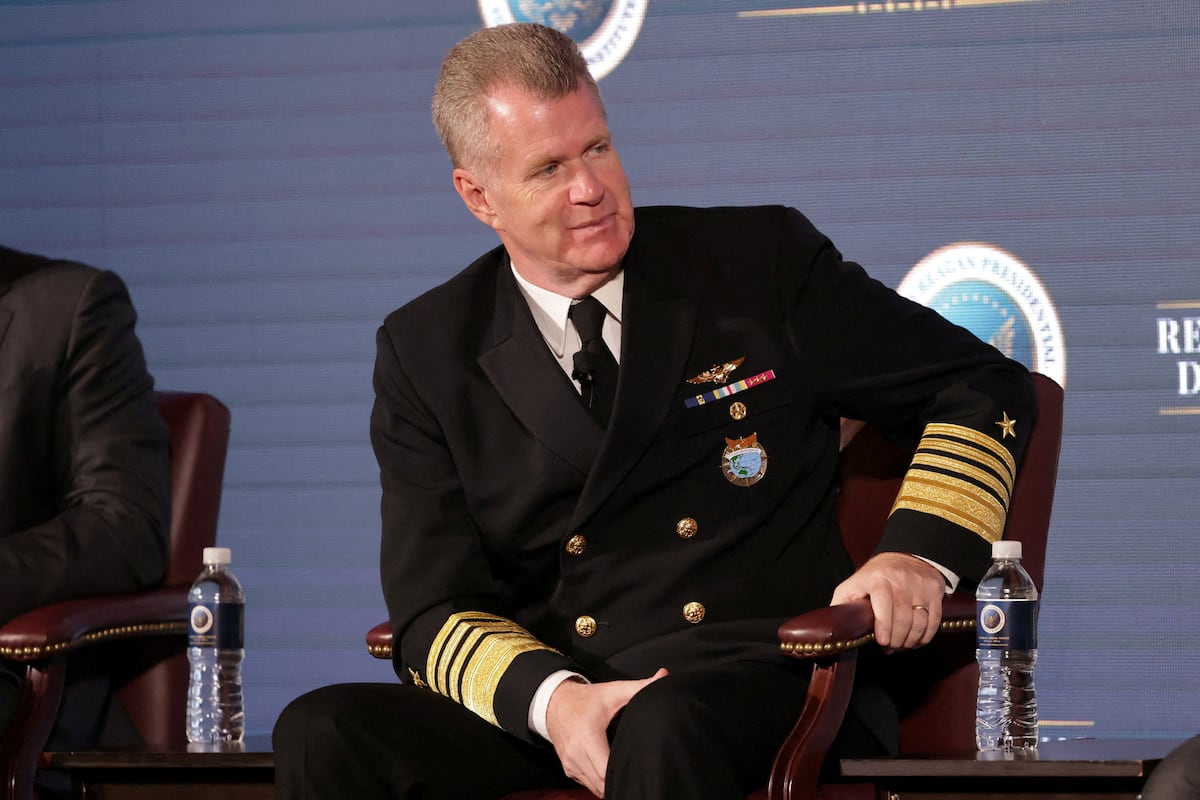
Caption: U.S. Indo‑Pacific commander addresses lawmakers on the importance of Taiwan’s self‑funded defense efforts | Credits: Jonathan Alcorn/Reuters
Geopolitical Impact: Deterrence Credibility, Regional Signaling, and Policy Options
The immediate strategic risk of a protracted budget stalemate is a weakening of deterrence: if Taipei cannot demonstrate both intent and capability to resist coercion, Beijing’s political calculus about the costs of pressure or limited use of force shifts in a direction unfavorable to Taiwan. For Washington and its regional partners, Taiwan’s defense posture is a central element of broader Indo‑Pacific stability. U.S. military and congressional reassurances help, but they are less credible if interpreted as a substitute for Taipei’s own commitments. A persistent domestic impasse also creates adverse signaling beyond the Strait — to Tokyo, Seoul, and Southeast Asian capitals — about the cohesion of deterrent arrangements and the willingness of democratic societies to shoulder their security burdens.
Politically, the dispute deepens polarization within Taiwan, complicating coalition‑building and undermining public confidence in defense planning. For the KMT, resisting large, rapid expenditures is both a fiscal stance and a message favoring dialogue with Beijing; for the ruling party it is an existential imperative to strengthen asymmetric and conventional capabilities. Both positions carry risks: insufficient investment reduces military preparedness, while large, opaque procurements can strain social consent and fiscal stability.
Strategic options for reducing risk are straightforward in principle. Taiwan should seek a bipartisan package that emphasizes transparency, phased procurement focused on high‑return asymmetric systems, and institutional reforms to accelerate contracting and maintenance. The United States should continue to provide material support, accelerate interoperability and logistics assistance, and couple arms approvals with training and sustainment commitments — while avoiding public statements that could be read as substituting for Taiwanese political responsibility. Regional partners can support capacity building, resilience initiatives and deterrence signaling without forcing an unwanted political outcome inside Taiwan.
In short, preserving credible deterrence on the Taiwan question requires both continued external support and, crucially, domestic political consensus to fund and field the capabilities that make coercion unaffordable for an adversary. The present budget fight is not merely a domestic fiscal dispute; it is a strategic crossroad with implications for the wider Indo‑Pacific balance of power.