
The administration’s 2027 budget proposal marks a decisive pivot toward hard power: a three-quarters‑of‑a‑trillion-dollar boost in defense outlays paired with a blanket 10% reduction in non‑defense discretionary programs, signaling an escalation in military priorities that will reshape Washington’s domestic politics, fiscal trajectory, and global posture amid an active conflict in the Middle East.
Budget Request and Immediate Policy Choices
The White House has submitted a request that would increase U.S. defense spending to roughly $1.5 trillion for fiscal 2027 — an approximate $500 billion uplift from 2026 — while seeking a uniform 10% cut across non‑defense discretionary accounts. This package bundles conventional force expansion with targeted initiatives such as a 5–7% pay raise for service members, an ambitious missile defense project dubbed the “Golden Dome,” investments in critical mineral stockpiles, and $65.8 billion earmarked for 34 new ships including surface combatants and submarines.
Politically, the timing is consequential: the request arrives as U.S. forces are engaged in operations related to the Iran conflict and as the administration prepares for the 2026 midterm contests. By front‑loading visible military benefits — troop pay raises, new platforms, and headline defense programs — the administration aims to consolidate support among defense hawks, veterans, and constituencies tied to shipbuilding and defense manufacturing, while offsetting domestic political costs from rising energy prices and war weariness.
Procedurally, the budget is an opening gambit. Appropriations committees historically reshape presidential submissions, and the White House document offers broadly prescriptive priorities rather than binding allocations. Still, the magnitude of the proposed defense surge and the across‑the‑board social program cuts set up a high‑stakes negotiation with Congress, where intra‑party splits and bipartisan concerns about fiscal sustainability, force readiness, and humanitarian obligations will shape the outcome.
Historical Drivers and Precedents of Militarized Budgets
The proposal fits into a long American pattern of defense spending spikes during periods of acute external threat or political realignment. Comparable surges followed the Cold War confrontations of the Reagan era, the post‑9/11 wars that reshaped procurement and force structure in the 2000s, and ad hoc emergency appropriations during major military campaigns. Each episode combined strategic signaling, industrial policy, and domestic political imperatives.
Two historical lessons are salient. First, large defense expansions tend to reconfigure the industrial base and labor markets — with shipbuilding, munitions, and critical‑mineral supply chains gaining long‑term structural importance. Second, wartime or crisis budgets often produce persistent fiscal legacies: emergency appropriations, once enacted, can be refashioned into baseline spending over time unless explicitly sunsetted, complicating later attempts at deficit reduction. The White House’s omission of comprehensive deficit projections mirrors past administrations’ strategic opacity when seeking rapid authorization for security programs.
Finally, the interplay between executive requests and congressional prerogatives reflects enduring institutional checks: while presidents set priorities, lawmakers protect local projects and program constituencies. The last congressional standoff that culminated in a prolonged shutdown underscores how such disputes about spending can produce institutional paralysis even as geopolitical tensions demand steady funding for operations and allies.
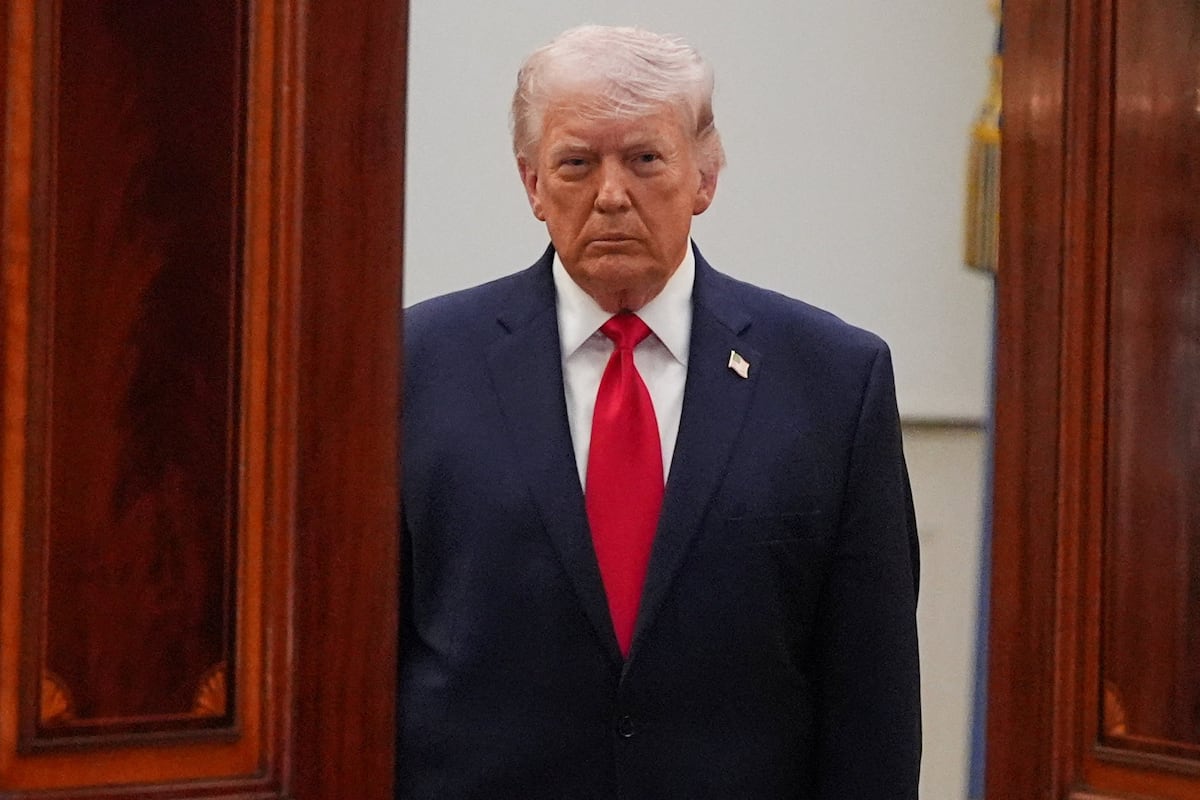
Caption: President Trump addressing the Iran conflict from the White House as the administration outlines its 2027 budget priorities | Credits: Alex Brandon/Pool via Reuters
Regional and Global Strategic Consequences
At the regional level, the budget’s emphasis on accelerated force buildup and missile defenses is likely to be interpreted by Tehran as preparation for sustained, expanded U.S. military engagement, increasing the risk of escalation. Iran and its partners may respond by accelerating asymmetric and missile capacities, deepening an arms‑competition dynamic across the Gulf that could entrench insecurity and raise insurance, shipping, and energy costs for global markets.
For U.S. allies, results will be mixed. Partners in Europe and the Indo‑Pacific will welcome stronger U.S. spending on advanced capabilities and shipbuilding that contribute to collective deterrence and burden‑sharing. Yet unilateral procurement priorities and a domestic cutback in foreign assistance or diplomatic programs could strain alliance management, reduce soft‑power tools, and shift more of the security burden onto partners at a time when integrated civilian‑military approaches are essential.
Economically, reallocating trillions toward defense while cutting social and non‑defense investments risks crowding out infrastructure, education, and climate resilience spending that underpin long‑term competitiveness. The fiscal impact is uncertain: with the White House withholding full deficit projections and the Congressional Budget Office already forecasting a rising deficit, the plan could exacerbate interest‑rate pressures and constrain fiscal flexibility for future crises.
Strategically, the proposal signals a recommitment to kinetic strength and industrial mobilization as primary tools of statecraft. That posture will appeal to constituencies prioritizing immediate deterrence but will also provoke questions about the sustainability of U.S. global leadership if diplomatic, developmental, and multilateral instruments are deprioritized. The likely congressional bargaining, public reactions to domestic cuts, and adversaries’ countermeasures will together determine whether this budget reshapes U.S. strategy or becomes another episodic expansion that leaves enduring domestic and international costs.