
The U.S. Department of Defense’s $4.7 billion award to Lockheed Martin to accelerate production of the PAC‑3 Missile Segment Enhancement marks a decisive industrial and operational shift: Washington is moving from emergency procurement to a sustained, high‑volume replenishment of advanced interceptors to blunt attrition risks exposed by recent conflicts and to reassure allies facing proliferating low‑cost strike options.
Current agreement and operational snapshot
The contract formalizes an intensive ramp‑up of PAC‑3 MSE interceptor deliveries intended for both U.S. forces and partner nations, converting a January framework into immediate production commitments. The interceptor, a highly maneuverable hit‑to‑kill round driven by a two‑pulse solid rocket motor and guided by Boeing‑supplied seekers, is designed to engage ballistic missiles, advanced cruise threats and high‑speed air targets. Complementary moves by Boeing, BAE and Lockheed to expand seeker and THAAD production reflect an integrated effort to scale a layered missile‑defense inventory across multiple systems. Practically, the deal aims to transition annual PAC‑3 output from roughly 600 to a goal near 2,000 over several years, seeking to replenish stocks consumed in recent combat operations and to create surge capacity for allies under strain.
Roots and strategic evolution of U.S. interceptor policy
The announcement sits atop a decade of incremental modernization and episodic crisis buying. The PAC‑3 MSE program evolved as part of a post‑Cold War pivot from large, centralized air‑defense arsenals toward precision, mobility and layered, theater‑scale defenses. High‑profile encounters in the 2020s, where cheap unmanned systems and low‑cost rockets imposed disproportionate attrition on defender inventories, reframed doctrine: stockpile resilience now matters as much as per‑unit capability. Historically, the U.S. industrial base has alternated between surge production during conflicts and low baseline outputs during peacetime; this contract signals a deliberate policy choice to sustain elevated production levels rather than rely on short‑notice ramp‑ups.
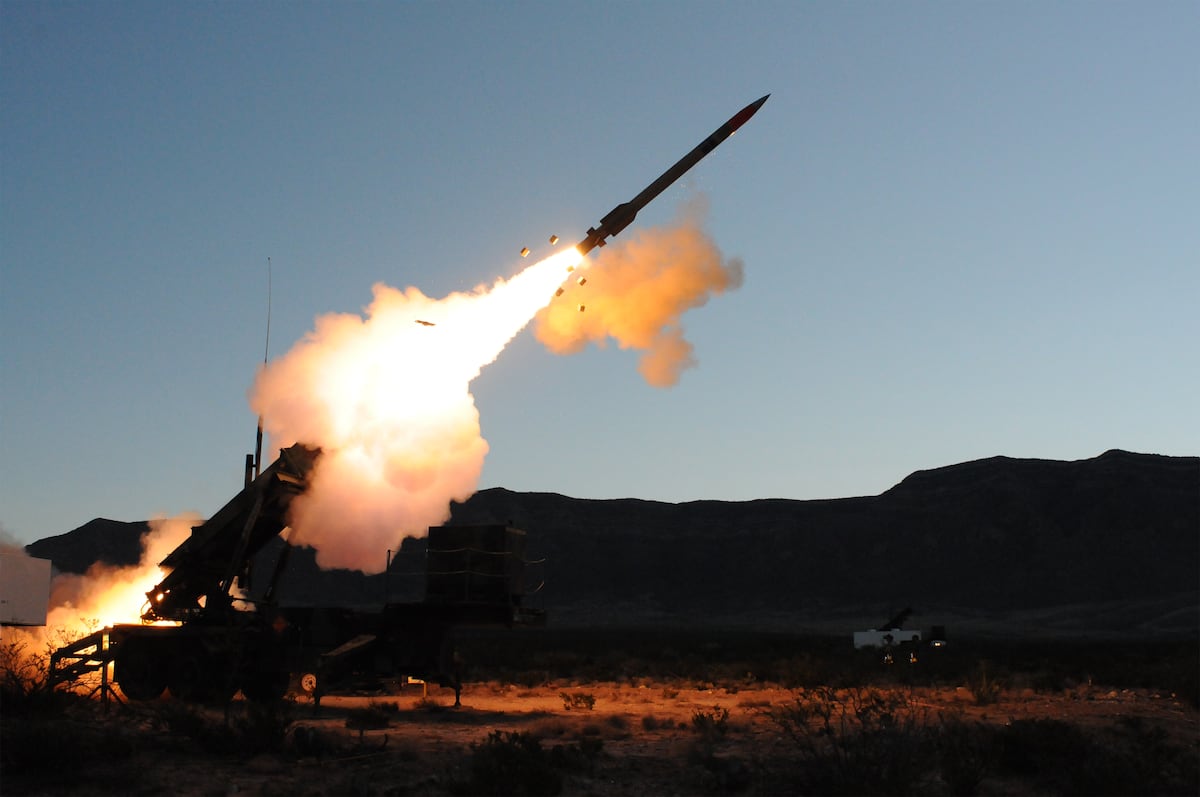
Caption: PAC‑3 MSE interceptor on display as part of the U.S. Army’s air‑defense portfolio | Credits: U.S. Army
Geopolitical consequences and strategic implications
At the geopolitical level, the deal has several immediate and medium‑term implications. First, it strengthens deterrence signaling to regional adversaries by demonstrating the U.S. commitment to reconstituting high‑end defensive capabilities for itself and key partners — a message particularly salient to allies in the Middle East and East Asia facing missile and drone saturation campaigns. Second, the economic asymmetry highlighted by recent conflicts — where $4 million interceptors counter $35,000 drones — forces a broader doctrinal and procurement recalibration: the U.S. will likely continue investing in both expensive interceptors for high‑value threats and complementary, lower‑cost defeat mechanisms (electronic warfare, point defenses, counter‑UAS measures, and attritable interceptors) to optimize cost‑exchange ratios.
Third, the industrial and supply‑chain expansion implicit in the award alters alliance dynamics. Countries dependent on U.S. air‑defense exports gain access to replenishment pipelines, deepening interoperability but also creating logistical dependencies. Simultaneously, large‑scale production commitments concentrate strategic leverage in a limited set of prime contractors and critical suppliers (e.g., seeker manufacturers), exposing a vulnerability if those nodes are disrupted—a risk that the Pentagon’s framework agreements attempt to mitigate via parallel contracts (e.g., THAAD seeker expansion with BAE and Lockheed).
Finally, the move may accelerate reciprocal responses from potential adversaries. If sustained U.S. interceptor availability reduces the effectiveness of certain strike options, rival states or proxies may invest more heavily in saturation, stand‑off, or stealthy attack methods, or seek asymmetric counters like inexpensive massed drones and loitering weapons. Consequently, the contract is as much an industrial policy decision as a tactical one: it underwrites a transition toward a durable, layered defensive posture while prompting adversaries to adapt the character of future threats.
In sum, Washington’s $4.7 billion commitment buys more than missiles: it commits resources to resilience, reassurance and the hard work of aligning defense industrial capacity with the realities of attrition‑heavy conflicts. The strategic payoff will depend on the Pentagon’s ability to balance expensive, high‑performance interceptors with cost‑effective complementary systems and to secure diversified supply chains that sustain production under crisis conditions.