
The week-long diplomatic push in Islamabad ended with U.S. and Iranian delegations departing without a deal, leaving a fragile ceasefire and global markets on edge while raising questions about the next diplomatic steps, the durability of regional calm, and the prospects for limiting Iran’s nuclear ambitions and control over the Strait of Hormuz.
Current situation: stalemate after high-level talks
The direct U.S.-Iran negotiations in Islamabad, the first at such senior levels in decades, concluded after prolonged sessions without an agreement. Both sides blamed the other: Washington framed the impasse around enforceable commitments to forswear nuclear weapons ambitions and the means to construct them, while Tehran criticized U.S. demands as excessive and complained that trust had not been sufficiently established. The two-week ceasefire that preceded the meetings remains in place for now, but its future is uncertain. Operationally, a handful of very large crude carriers were able to transit the Strait of Hormuz during the pause, yet hundreds of vessels remain queued, illustrating the fragile nature of maritime commerce recovery. Militarily and politically, allied combat actions—most notably Israeli strikes on Hezbollah positions—continue to complicate any bilateral settlement between Tehran and Washington.
Historical backdrop: direct talks amid long-running rivalry
These talks occurred against a long, adversarial history that stretches back to the 1979 Iranian Revolution and subsequent ruptures in U.S.-Iran relations. Past diplomatic efforts, including the 2015 nuclear accord (JCPOA) and its unraveling in subsequent years, show the difficulties of reaching durable, verifiable arrangements when mutual mistrust is high and sanctions, regional proxies, and domestic political pressures constrain flexibility. The Islamabad meetings were the highest-level direct engagement between the two capitals since 1979, reflecting both the urgency of halting further escalation and the limits of indirect channels. The current conflict ignited in late February with air strikes attributed to the U.S. and Israel, accelerating a broader confrontational dynamic across the Gulf and Levant and reviving the Strait of Hormuz as a strategic flashpoint for global energy flows.
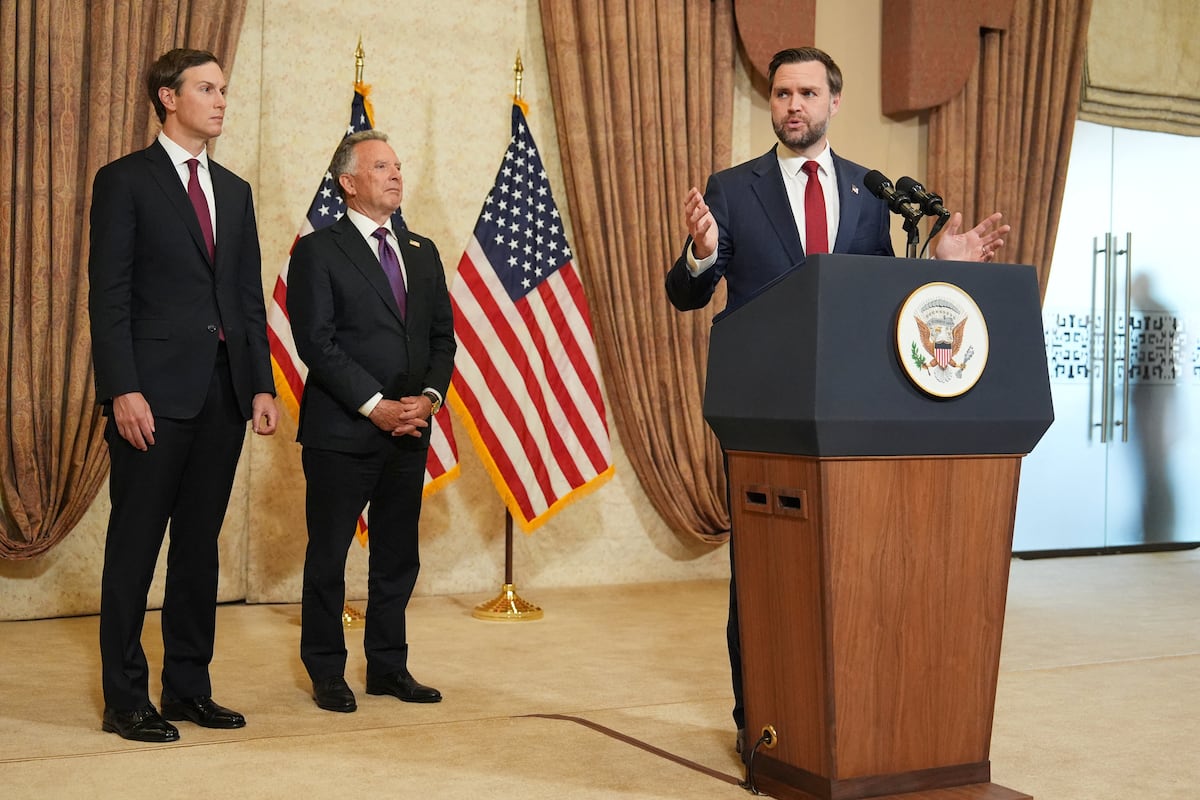
Caption: Vice President JD Vance speaks during U.S.-Iran talks in Islamabad, April 12, 2026 | Credits: Jacquelyn Martin/Reuters
Geopolitical implications: risks, leverage, and policy options
The diplomatic stalemate raises immediate and medium-term strategic risks. First, the ceasefire’s fragility means a return to kinetic escalation is possible, especially if confidence-building measures are not implemented quickly. Continued Israeli operations against Hezbollah and Iran’s insistence on regional-wide cessation of hostilities complicate compartmentalized deals. Second, economic impacts are tangible: sustained restrictions on shipping through the Strait of Hormuz would keep oil prices elevated and strain energy-dependent economies, incentivizing alternative routing and naval escorts that increase geopolitical friction. Third, the nuclear dimension remains central; without verifiable, phased constraints and intrusive monitoring, Washington will continue to see a latent Iranian nuclear capability as unacceptable, while Tehran’s refusal to accept expansive limits reflects strategic deterrence aims and domestic political constraints.
Strategically, the impasse reinforces the value of intermediate, confidence-building steps over an all-or-nothing settlement. Possible paths forward include a time-bound, monitored commitment by Iran to halt specific enrichment milestones in exchange for phased release or unfreezing of selected assets, third-party security guarantees for Gulf shipping, and an international monitoring mechanism (potentially under IAEA or UN auspices) to verify compliance. Regional stakeholders—Gulf states, Pakistan as host, Turkey, and European powers—could play mediating or guarantor roles if their incentives align and if Washington and Tehran accept multilateral involvement. Conversely, sustained failure to reach even incremental agreements increases incentives for hardliner policies on both sides, risks widening the conflict through proxy fronts, and could push external powers to hedge more openly: greater Russian or Chinese diplomatic and economic engagement with Tehran, or intensified military presence by the U.S. and its partners to secure maritime routes.
In short, the Islamabad talks showed that direct engagement is possible but insufficient on its own; durable stabilization will require calibrated, verifiable steps that balance Iran’s demands for relief and sovereignty with international concerns about nuclear pathways and regional security. The coming weeks will be critical to see whether the ceasefire can be institutionalized through structured confidence-building, or whether the absence of a deal will result in renewed confrontation with broader regional and global consequences.