
Introduction: The U.S. Navy’s decision to integrate the PAC-3 Missile Segment Enhancement (MSE) interceptor into the Aegis Combat System marks a significant shift in American naval air defense: it moves one of the Army’s most capable hit‑to‑kill interceptors from a land‑based, theater‑centric role into the maritime domain, expanding layered defense options at sea and reshaping operational planning, logistics, and regional deterrence calculations.
Navy Integration of PAC-3 MSE: Operational Shift at Sea
The planned integration — under a recently awarded multi‑million dollar Lockheed Martin contract — will enable Aegis-equipped U.S. destroyers and cruisers to field the PAC-3 MSE, harnessing its high‑velocity, hit‑to‑kill performance against ballistic, cruise, and advanced airborne threats. Operationally, this provides the fleet with a kinetic option optimized for precision intercepts at shorter ranges and higher speeds than many current naval interceptors, complementing longer‑range Standard Missiles within Aegis. Aegis’s advanced radar and fire‑control suite, capable of tracking over one hundred contacts simultaneously, offers a mature sensor-shooter architecture that can exploit PAC‑3 MSE’s onboard guidance and seeker capabilities.
From a force employment perspective, PAC‑3 MSE aboard ships increases tactical flexibility: ships can contribute to theater layered defenses in littoral and expeditionary operations, protect high‑value units against complex raids and cruise‑missile salvos, and add resilience to carrier strike groups and amphibious formations. However, embedding a land‑origin interceptor into maritime logistics and combat loadouts will require adaptations in storage, handling, integration testing, and doctrine — and it raises immediate questions about inventory management given the missile’s high unit cost and the Navy’s historically different engagement pacing.
Evolution of U.S. Missile Defense: From Land Systems to Multi‑Domain Layers
Historically, the PAC‑3 family was developed to enhance land‑based Patriot capabilities against high‑speed missile threats through hit‑to‑kill technology and incremental seeker and propulsion improvements. The MSE variant extended range and maneuverability, making it attractive for more contested environments. Integrating PAC‑3 MSE into Aegis follows a broader trend over the last two decades of converging air and missile‑defense solutions across services — an effort driven by proliferating missile threats, the need for redundant engagement options, and the emergence of high‑density, low‑cost swarm and cruise threats.
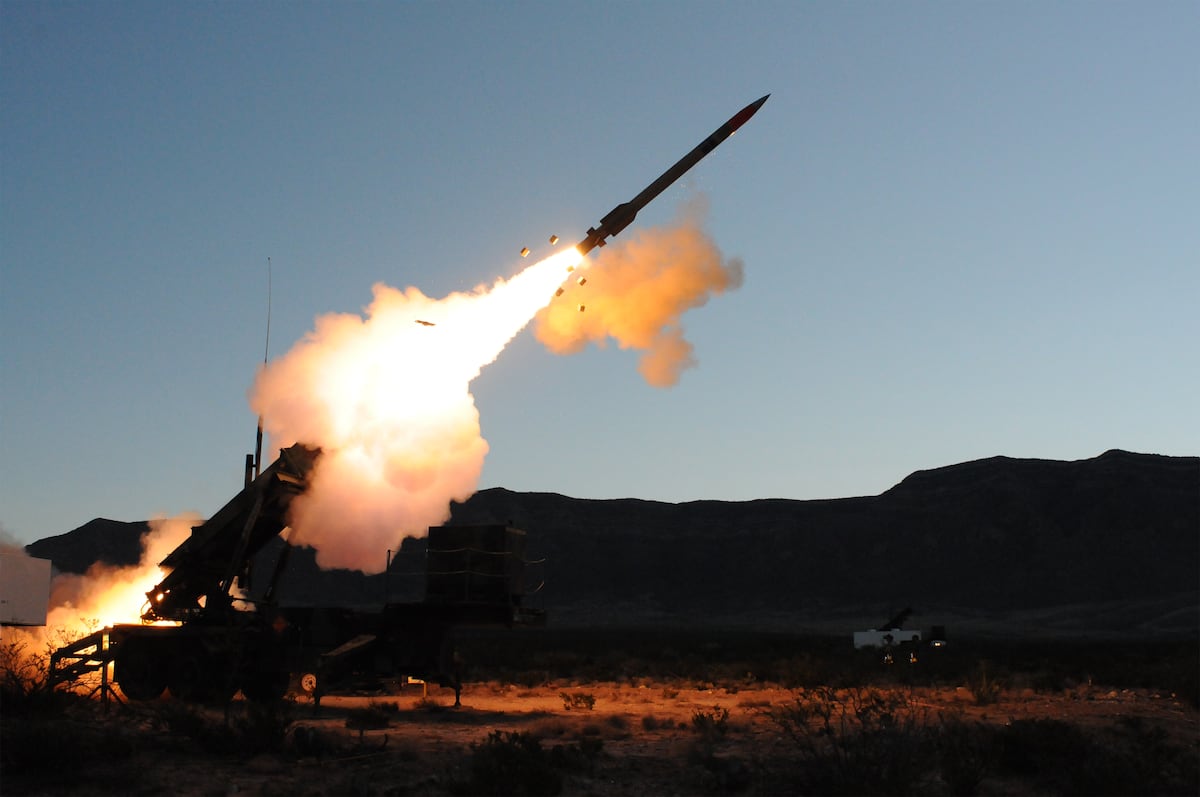
Caption: US industrial lines scale up PAC‑3 MSE production to meet growing demand while the missile is adapted for shipboard use | Credits: U.S. Army
Regional and Strategic Geopolitical Consequences
At the regional level, PAC‑3 MSE aboard U.S. Navy ships will alter threat calculations for state and non‑state actors that rely on cruise missiles, ballistic missiles, and massed unmanned systems. In contested theaters — from the Indo‑Pacific to the Middle East — mobile, sea‑based interceptors introduce an unpredictable element in defender positioning and complicate adversary targeting. For U.S. allies and partners, ship‑based PAC‑3s could be a force multiplier: deployed naval platforms can quickly bolster allied air defenses in crisis, supporting collective deterrence without the political friction of basing land interceptors ashore.
Strategically, the integration underscores the Pentagon’s response to a difficult cost‑exchange dynamic: high‑value interceptors (estimated near $4 million per PAC‑3) facing inexpensive drones and cruise weapons change the economics of attrition. Scaling production, as Lockheed Martin and subcontractors increase annual output toward thousands of interceptors, aims to mitigate stockpile depletion risks during sustained conflicts. Yet, without concurrent investment in lower‑cost countermeasures, passive defenses, and more affordable intercept technologies (directed energy, electronic warfare), the U.S. may continue to face unsustainable expenditure rates in protracted campaigns.
Finally, the move has industrial and alliance implications. Expanding PAC‑3 maritime roles strengthens Lockheed Martin’s market footprint and may accelerate allied interest in cross‑domain interoperability. It also raises procurement and export considerations: shipboard PAC‑3s will require new qualification, training, and sustainment pathways for navies contemplating similar architectures, potentially prompting cooperative programs or technology sharing with key partners to field more integrated, resilient regional air‑defense networks.