
The three Baltic states have launched a concentrated, politically charged effort to transform €12.2 billion in EU SAFE loans into a durable front-line deterrent: rapid acquisitions of heavy equipment, air defenses, unmanned systems and localized munitions capacity tied to technology transfers and domestic industrial growth. This investment is less a one-off military upgrade than a strategic industrialization program designed to lock resilience into NATO’s eastern flank and reshape the regional balance of power over the coming decade.
Current posture and planned procurements
Estonia, Latvia and Lithuania are moving quickly to obligate roughly €12.2 billion in low-cost SAFE loans on systems prioritized by wartime lessons and geographic vulnerability. Lithuania, with the lion’s share of available funding, is focusing on heavy armor, infantry fighting vehicles and a significant ramp-up of 155 mm artillery ammunition production through partnerships with European suppliers. Latvia targets unmanned aerial systems, counter-drone capabilities and missile systems as asymmetric, cost-effective force multipliers. Estonia is reallocating planned mechanized purchases toward layered air defenses, counter-drone measures and UAVs while advancing a formal selection for a national missile defense system and investing in local sustainment facilities tied to HIMARS. Across all three capitals there is a consistent demand that procurement be accompanied by domestic production, maintenance facilities and some level of technology transfer rather than pure off-the-shelf buys.
Roots of the push and regional industrial strategy
The current procurement wave is rooted in the shock of Russia’s full-scale invasion of Ukraine in 2022 and subsequent operational lessons from that conflict. Baltic policymakers view industrial capacity—ammunition plants, repair yards, local assembly and maintenance—as integral to battlefield resilience. This strategic logic follows wartime realities where logistics, sustainment and munitions production have been decisive. The Baltic approach marries three policy vectors: rapid force modernization to close critical capability gaps; economic development through foreign direct investment in defense manufacturing; and integration of local firms into NATO and EU supply chains to reduce single-source dependencies. Institutional enablers include a 2024 Lithuanian law streamlining defense-industry participation and coordinated initiatives such as a proposed joint “Baltic Drone Wall” that pool resources for airspace denial and counter-UAV defenses.
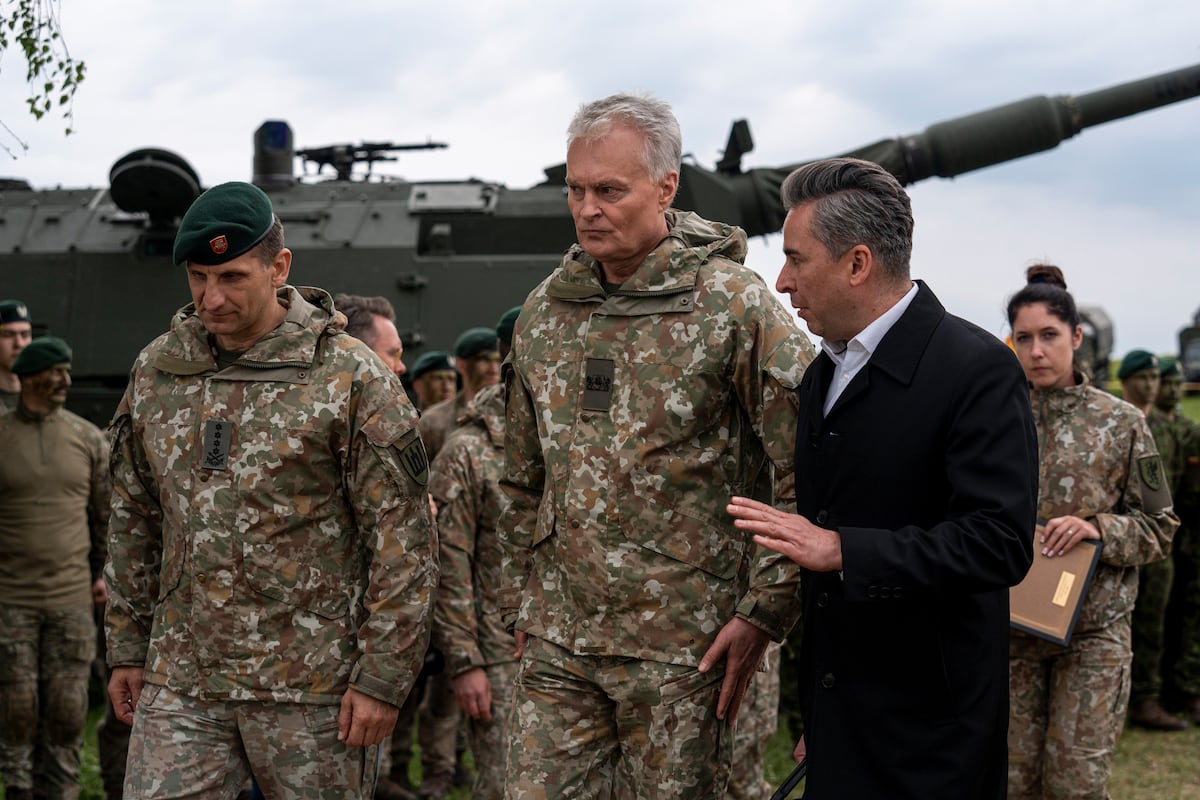
Caption: Lithuanian forces and leaders at exercises near the Suwalki Gap underscoring the focus on frontline readiness | Credits: Damian Lemanski/Bloomberg via Getty Images
Regional and international strategic implications
The Baltic investment program has four interlocking geopolitical effects. First, deterrence posture and operational resilience will be materially strengthened: more ammunition capacity, robust air defenses and proliferated counter-UAV systems reduce the window of vulnerability and raise the cost of any aggression against the Baltic states. Second, the insistence on domestic production and technology transfer creates a durable industrial footprint that binds Western defense firms to the region, deepening interoperability but also creating long-term commercial dependencies. Third, the move accelerates EU defense industrialization and tests SAFE as a policy tool; success will incentivize similar strategies across frontline EU members while raising questions about export controls, intellectual property and the protection of dual-use technologies. Fourth, Russia will register the program as a strategic consolidation of NATO’s first line of defense, likely prompting doctrinal and force-posture adjustments and a renewed emphasis on countermeasures such as anti-access/area-denial investments and information operations directed at cohesion within the EU and NATO.
Risks and constraints are significant. Industrial scaling of munitions and complex systems requires time, skilled labor and secure supply chains; political friction within EU procurement frameworks and competition among suppliers could delay deliveries. Concentrated investment in certain capabilities (e.g., armor) at the expense of mobility or logistics, or vice versa, would create exploitable seams. Finally, the rapid militarization of the Baltic industrial base raises escalation dynamics in the neighborhood: Moscow may respond with asymmetric operations below the threshold of open conflict or with more aggressive signaling toward Baltic minorities, energy infrastructure and maritime approaches.
Practical recommendations for policymakers: sequence investments to provide early operational effects (air defenses, counter-UAS, munitions); scaffold technology transfer with enforceable milestones and workforce training programs; harmonize procurement specifications across the three states to maximize economies of scale and interoperability; integrate industrial-development metrics into NATO logistics planning; and coordinate diplomatic signaling with EU and U.S. partners to mitigate escalation risks while ensuring rapid delivery and sustainment of critical systems.