
France has moved its carrier strike group, centered on the nuclear-powered Charles de Gaulle, into the southern Red Sea as a preparatory step for a potential multinational mission to secure transit through the Strait of Hormuz—an initiative that seeks to marry naval deterrence with diplomacy to stabilize a waterway whose closure would reverberate through global trade and energy markets.
Deployment overview and immediate dynamics
The French deployment is both demonstrative and operational: the Charles de Gaulle, escorted by allied warships including Italian and Dutch vessels, is positioned to assess the tactical environment, expand crisis-management options, and create a platform for integrating partner assets under a defensive legal framework. Paris frames the move as part of a Franco‑British initiative that would protect commercial convoys once hostilities abate and require coordination with regional actors. The proposal envisions reciprocal confidence‑building measures—Iran permitting passage in exchange for negotiated concessions from Washington—yet it hinges on Iranian and U.S. consent. Recent exchanges of fire that undermined a tenuous ceasefire underscore the fragility of progress and the real risk that attempts to secure shipping could either deter further disruption or become another flashpoint if not tightly coordinated.
Historical lessons: naval power, leverage, and the Hormuz precedent
The use of naval force and convoy protection in the Persian Gulf has deep precedents. From the tanker conflicts of the 1980s during the Iran‑Iraq War to the 2019 episodes of tanker seizures and maritime attacks, control of the Strait of Hormuz has repeatedly served as strategic leverage for regional belligerents. Western powers have long alternated between ad hoc escorts, multinational coalitions and diplomatic outreach to keep the waterway open—actions that demonstrate both the utility and limits of naval power in resolving political disputes. Carrier strike groups provide sea control, air coverage and command-and-control, but history shows they cannot substitute for negotiated arrangements when a coastal state regards access as core leverage. The proposed Franco‑British framework reflects those lessons: shipping security will be sustainable only if paired with political settlements that address the underlying grievances driving Iranian interdiction.
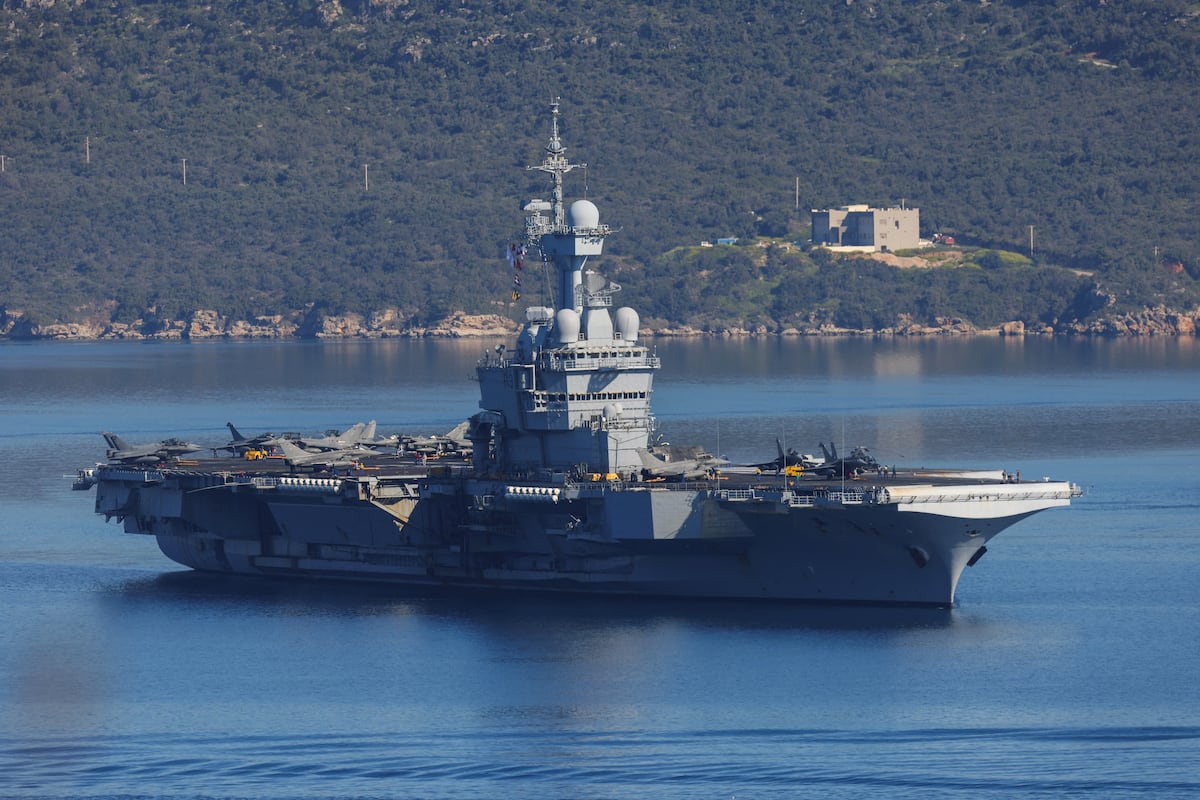
Caption: French aircraft carrier Charles de Gaulle departing Souda Bay en route to the Red Sea amid plans for a multinational Hormuz mission | Credits: Stefanos Rapanis/Reuters
Geostrategic consequences and policy implications
The deployment and the diplomacy it encapsulates have multiple geopolitical effects. First, a successful multinational security mechanism could de‑escalate a regional crisis, stabilize oil markets and reassert European agency in a theater where Washington and Tehran have been the primary adversaries. Second, the initiative risks escalation if Tehran views multinational escorts as partisan or if rules of engagement are not meticulously deconflicted with U.S. forces and regional navies. Third, the proposal reframes maritime security as leverage in parallel negotiations over nuclear and missile issues, signaling a shift toward integrated bargaining that links economic passage to diplomatic concessions.
Operationally, securing convoys through the Strait presents acute challenges: narrow chokepoints, asymmetric threats (small boat attacks, mines, drones), and the need for precise intelligence and rules of engagement that all participating navies accept. Politically, France and Britain must balance alliance politics—ensuring U.S. buy‑in or at least non‑obstruction—while courting regional states, notably Gulf littoral countries and Oman, whose consent and port access are critical. Finally, the move will test European unity: deploying military capability to protect global trade can shore up Paris and London’s strategic standing, but it also risks entangling them in a broader conflict dynamic driven by U.S.–Iran competition and, indirectly, the wider Israel‑Iran confrontation.
Near‑term outlook: The mission’s viability depends on parallel diplomatic channels to convert tactical protection into durable access guarantees. If Iran refuses the reciprocity envisaged, Western escorts could deter some attacks but are unlikely to remove Iran’s leverage without concessions, raising the probability of episodic escalation. Conversely, if negotiations yield even partial compromises, a multinational convoy framework could provide a stabilizing bridge from high tension to negotiated settlement.