
France’s advancing rocket-artillery project entered a decisive phase in April 2026 when Safran and MBDA successfully test-fired a domestically developed munition, underlining Paris’s intent to field longer-range, sovereign land-strike capabilities that could be available to the French Army as early as 2029 if selected — reshaping France’s fires posture and European tactical deterrence over the coming decade.
Program status and immediate operational outlook
The recent test validated the Thundart rocket developed jointly by Safran and MBDA: a ground-to-ground round with roughly 150 kilometers of range, a high-supersonic flight profile, a ~100 kilogram warhead, and guidance features intended to resist electronic interference. Industry sources say the round uses MBDA/Roxel propulsion and a derivative of Safran’s AASM guidance kit; an improved seeker combining inertial, laser and infrared sensors is slated for deliveries beginning in 2027. Safran and MBDA report readiness to scale to serial production and have proposed delivering full multiple-launch rocket systems (MLRS) by 2029 if the French Directorate General for Armament (DGA) requests, with an operational battalion-level capability targeted by 2030. The launcher concept is an eight-wheeled Scania truck carrying up to eight rockets with rapid displacement after firing — a tactical imperative to improve survivability. Procurement planning remains flexible: Paris expects to replace nine legacy LRU launchers with at least 13 systems by 2030 and eventually buy up to 26 launchers and 300 munitions by 2035, while also evaluating competing domestic and off-the-shelf offers on effectiveness, cost, and delivery cadence.
Historical drivers and previous capability gaps
France’s pursuit of a new long-range rocket-artillery solution responds to a multi-year recognition that Soviet- and Cold War–era artillery concepts no longer meet modern theater demands. The current LRU fleet has aged and lacks the range, precision, and electronic resilience emphasized by recent high-intensity conflicts. Lessons from those campaigns — particularly the emphasis on deep fires, standoff engagements, and distributed operations — accelerated French requirements for longer reach and rapid shoot-move tactics. Historically, European militaries have balanced sovereign development with foreign purchases; in recent years several NATO and EU members adopted Korean Chunmoo, Israeli PULS, or US HIMARS variants to close urgent gaps. France’s industrial base, however, has invested steadily in munitions, seekers, and propulsion: MBDA and Roxel for rocket motors, Safran for guidance kits, and expanded production lines across both firms. That investment is intended to restore a fully domestic capability to avoid export-control constraints and supply-chain vulnerabilities encountered when relying on non-sovereign systems.
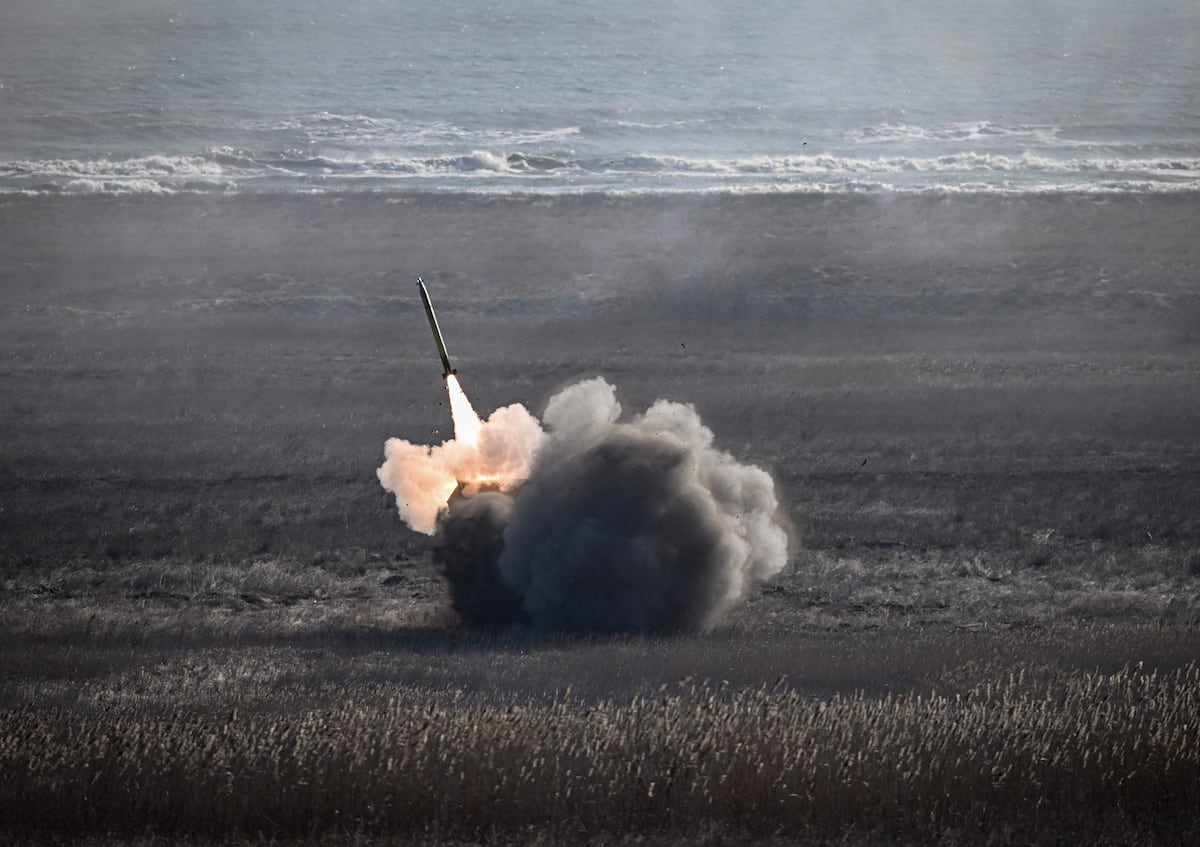
Caption: French multiple-launch rocket system fires during a training exercise on the Black Sea shore; test launches underpin Paris’s push for longer-range domestic fires capability | Credits: Daniel Mihailescu/AFP via Getty Images
Strategic and geopolitical implications
Deploying a French-built, ITAR-free long-range rocket capability will have several layered effects across strategy, alliance politics, and European defense industry dynamics. Operationally, a 150 km-plus precision strike round expands France’s ability to influence events below the threshold of air campaigns, improving deep interdiction, counterfire, and anti-access options in a contested theater. For NATO, additional French long-range fires enhance collective deterrence and add complementary capabilities to U.S.-sourced systems; however, interoperability choices — warhead effects, datalinks, and logistics — will matter for integration in multinational formations.
Politically, possession of a sovereign, export-control-free system gives France greater autonomy in crisis response and increases Paris’s leverage in European industrial cooperation. It also creates export possibilities to partners seeking alternatives to U.S. or Israeli systems without ITAR constraints. Conversely, rapid fielding of longer-range rockets raises regional escalation concerns: neighbors and theaters of operations may accelerate acquisition of counter-battery, air-defense, and long-range strike systems, intensifying an arms acquisition cycle among European states.
Economically and industrially, a successful Thundart program would sustain and expand high-value employment in propulsion, guidance, and missile production, while demonstrating capacity to ramp output — MBDA and Safran both cite readiness for increased throughput. That will strengthen France’s negotiating position when comparing domestic solutions with off-the-shelf offers from South Korea, Israel, India or the U.S., where delivery times, lifecycle costs, and sovereign access to technology are decisive factors.
Finally, capability choices hinge on rigorous comparative assessment: range and precision must be evaluated alongside survivability, sustainment, command-and-control resilience, and the ISR ecosystem that enables effective long-range fires. If France opts for a sovereign path, timelines and production scale must be matched by investments in targeting, force protection, and electronic resilience to realize the deterrent and operational benefits without exacerbating regional instability.