
U.S. special operations leaders are warning that commercial vendors’ proprietary controls over unmanned systems and other gear are preventing frontline units from making rapid, battlefield-driven adaptations—an emerging capability gap that undermines operational agility at a time of sustained deployments, contested basing access, and rapidly diffusing drone technology among adversaries and criminal networks.
Operational bottleneck: Edge units barred from quick fixes and upgrades
Senior commanders from Army, Air Force, Navy and Marine special operations testified that proprietary vendor agreements are creating a practical barrier to on-the-spot modification, repair and iterative enhancement of equipment—most acutely for small unmanned aerial systems. Commanders described situations where operators at the tactical edge lack authority, data access, or software interfaces needed to attach new payloads or alter mission software, leaving units dependent on vendors’ schedules and priorities. The effect is twofold: first, a slower institutional response to capability shortfalls when operational commanders want to trial new sensors, weapons or software; second, a maintenance and readiness risk when field personnel cannot perform expedient repairs or reconfigure systems to meet emergent threats. The testimony also highlighted an uneven market dynamic in which small, fast-moving vendors struggle to compete with large manufacturers that safeguard proprietary mission-computer architectures, thereby restricting the pathways through which innovation reaches the user.
Continuity and contest: SOCOM’s history with rapid innovation and the right-to-repair debate
U.S. special operations forces have a track record of adopting and iterating experimental technologies ahead of service-wide acquisition cycles, using field experience to refine concepts and scale novel capabilities. That historical role—as early adopters and in-theater experimenters—now clashes with a broader, civilian-rooted “right-to-repair” movement and the intellectual property practices of defense and commercial suppliers. Legislative momentum for explicit repair and modification authorities was curtailed when right-to-repair provisions were removed from the fiscal 2026 National Defense Authorization Act, leaving the services to negotiate access case-by-case through procurement contracts and vendor agreements. At the same time, the ubiquity of commercially available drones means non-state actors can buy, adapt and field modified systems quickly, complicating the operational environment for forces that are constrained in similar adaptation.
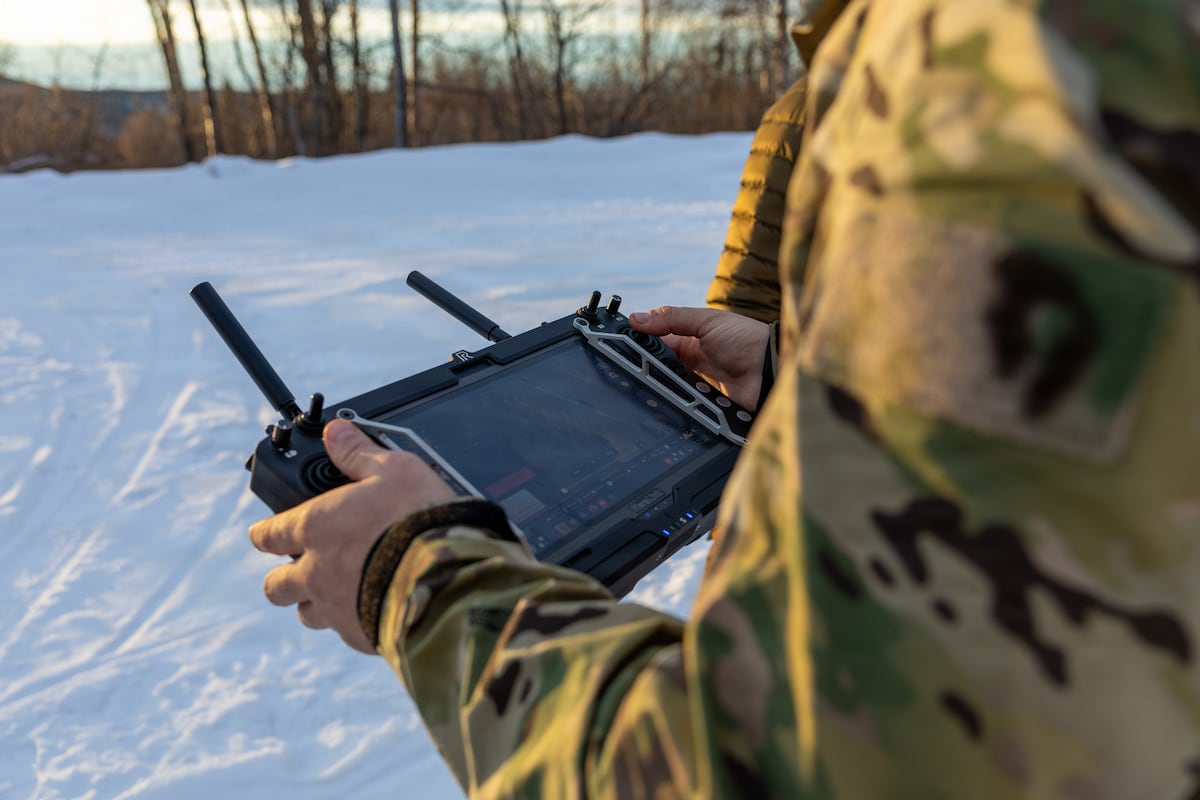
Caption: An 11th Airborne soldier operates an unmanned aerial system during training, underscoring reliance on UAS at the tactical edge | Credits: Bridget Donovan/U.S. Army
Geopolitical consequences and policy implications
The operational constraints described by special operations leaders carry strategic-level implications. Tactically, an inability to iterate rapidly at the edge widens the gap between U.S. capabilities and those of adaptive adversaries and non-state actors that can modify commercial drones with little bureaucratic friction. Operationally, vendor locks slow the fielding of novel payloads and tactics that could alter mission outcomes. Strategically, these constraints interact with alliance dynamics and force posture: senior leaders testified that strained access to European basing and overflight—exemplified by recent denials from some host nations—compounds SOCOM’s challenges by increasing transit complexity and logistical friction for time-sensitive deployments. Together, these pressures erode the competitive advantage that U.S. special operations historically provide in expeditionary and irregular environments.
Policy responses should balance security, industrial base health and operational agility. Viable approaches include contract clauses requiring open or modular interfaces for mission computers, standardized architectures that permit authorized local modification without compromising cybersecurity, and clearer statutory authorities or procurement rules that give combatant commanders graded rights to repair and update systems in theater. At the same time, the Department of Defense and Congress must weigh intellectual property and supply-chain risk mitigation, vendor vetting, and export-control harmonization to avoid unintended technology proliferation. Failure to address these issues risks slowing innovation at the point of need, reducing deterrent credibility in contested spaces, and ceding initiative to adversaries and illicit actors that already exploit commercially available unmanned systems with minimal constraints.