
Intelic’s launch of BASE and its Nexus command-and-control software marks a practical attempt to overcome Europe’s long-standing defense procurement fragmentation by creating a curated, interoperable marketplace for ready-to-deploy military drones—an initiative that promises faster fielding, deeper industrial cooperation across multiple European states, and fresh geopolitical trade-offs tied to sovereignty, supply security, and alliance interoperability.
Current operational shift: A marketplace to accelerate drone procurement
The creation of BASE by Dutch startup Intelic assembles manufacturers from at least nine European countries into a single procurement-focused portal that emphasizes platform-agnostic interoperability through Intelic’s Nexus software. By allowing defense ministries to compare mission-ready unmanned aerial systems (UAS) that are pre-certified to work together under a common C2 layer, the platform directly targets three chronic problems for European militaries: long acquisition cycles, integration risk, and lack of visibility across the supplier base. The reported commercial scale of participating firms—estimated combined sales above €1.5 billion this year—suggests immediate market relevance and a customer base that ranges from smaller NATO members to larger European armies. Intelic’s model deliberately separates logistics responsibility (left to manufacturers) from software-enabled interoperability (guaranteed by Intelic), enabling a modular procurement approach while concentrating a strategic dependency on Nexus as the interoperability enabler.
Historical drivers and precedents that shaped this approach
BASE reflects an evolutionary moment in European defense procurement rooted in two historical trends. First, Europe’s post–Cold War defense industrial landscape fragmented across national champions and bespoke programs, producing slow, bespoke acquisition timelines and limited cross-border standardization. Second, the conflict in Ukraine catalyzed an operational and commercial rethink: Ukraine’s frontline-driven procurement innovations—exemplified by Brave1—demonstrated how near-real-time connections between end users and manufacturers could accelerate iteration, deployment, and doctrinal change. Intelic’s approach imports that operational lesson into a European legal and institutional context, adapting the marketplace concept to work within ministries of defense rather than enabling frontline direct buys. Nexus’s documented deployment in Ukraine since 2025 and its integration with regional platforms provide a practical lineage: rapid wartime innovation informed a peacetime industrial strategy for interoperability and scalability.
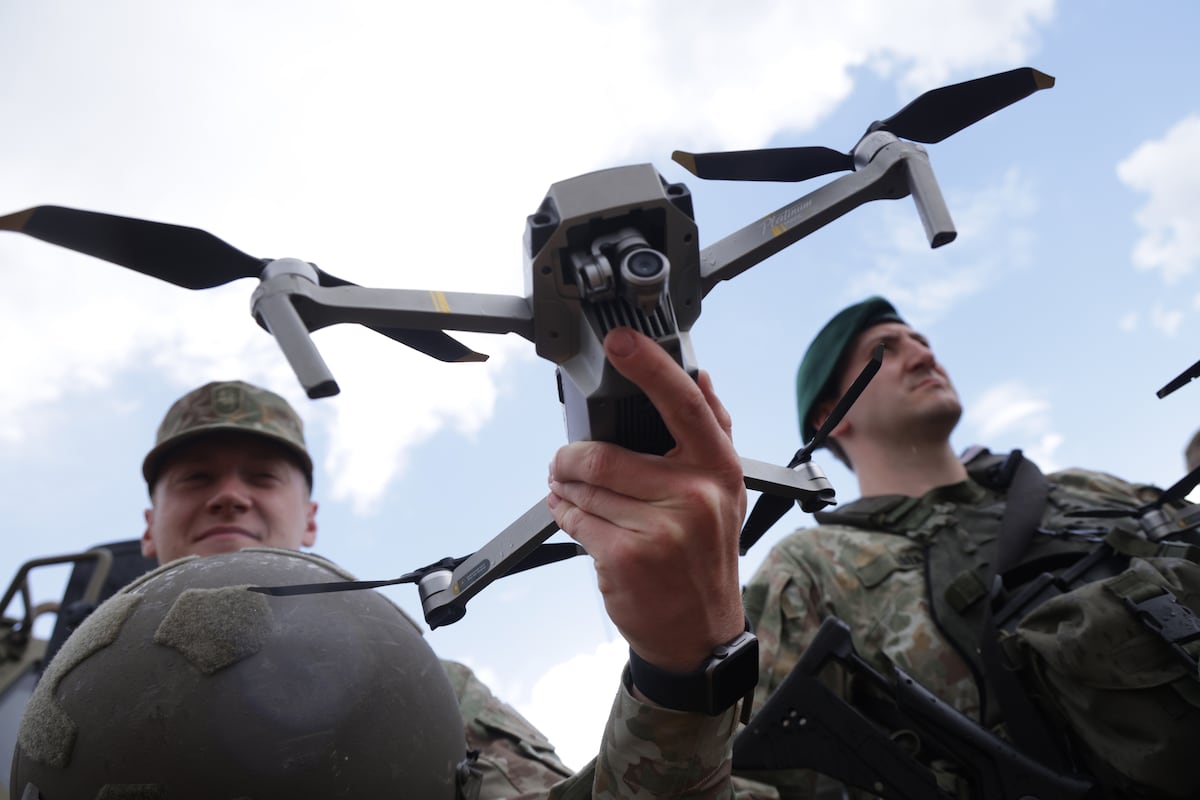
Caption: Lithuanian troops with tactical drones at a regional exercise, illustrating the rise of small UAS in European land forces | Credits: Sean Gallup/Getty Images
Geopolitical implications and policy considerations
Strategic benefits: BASE can materially shorten time-to-field for coalition forces, improve cross-border logistics planning, and allow smaller or lower-budget states to identify interoperable kits without investing in bespoke integration programs. By concentrating interoperability in software, Intelic offers a scalable path toward collective capability where national procurement cycles and requirements often diverge.
Risks and dependencies: Centralizing interoperability on a single commercial software stack creates a potential strategic chokepoint: if Nexus becomes de facto middleware for European UAS, operational resilience will depend on the security, export controls, and sustainment of that software. Because Intelic explicitly does not guarantee hardware delivery, states remain exposed to supply-chain disruptions, export-license delays, and uneven industrial capacity across partner countries. Inclusion of Ukrainian suppliers and others outside traditional EU procurement channels increases operational flexibility but raises legal and political questions about arms-export controls, certification, and long-term sustainment commitments.
Alliance dynamics and industrial policy: The platform has the potential to advance European strategic autonomy by developing a more integrated continental supplier ecosystem, but doing so will require alignment with NATO standards and EU procurement and defense-industrial policies. Brussels-level harmonization—covering certification, cyber-hardening, and lifecycle logistics—would maximize benefits and mitigate fragmentation. Conversely, failure to coordinate could entrench a new form of vendor fragmentation where mutually incompatible ecosystems coexist.
Operational recommendations for policymakers: 1) Prioritize interoperable standards and cybersecurity certification for C2 middleware to reduce systemic risk; 2) Establish EU- or NATO-led mechanisms to vet marketplace participants and to coordinate export-control and sustainment commitments; 3) Invest in collective maintenance and training hubs to convert accelerated procurement into sustained capability; 4) Monitor dependencies on single vendors and encourage open interfaces so competing C2 solutions can interoperate, preventing vendor lock-in.
In sum, Intelic’s BASE represents an innovative, market-driven response to Europe’s procurement and integration dilemmas, borrowing operational lessons from wartime experimentation in Ukraine. Its success will hinge less on technology novelty than on political will to harmonize standards, manage supply-chain risk, and embed the marketplace within a broader strategy for collective readiness and industrial resilience.