
Admiral Brad Cooper’s testimony crystallizes a paradox: a high-intensity U.S. campaign has markedly degraded Iran’s conventional and industrial military capabilities, yet the Islamic Republic retains asymmetric tools and strategic resilience that keep it a meaningful regional actor and a persistent risk to maritime commerce and allied interests.
Current situation: Degradation of Iranian military capacity and the Hormuz stalemate
U.S. Central Command frames the 38-day Operation Epic Fury as a decisive campaign that has sharply reduced Iran’s ability to wage conventional and maritime interdiction operations. CENTCOM asserts elimination of roughly 90% of Iran’s naval mine inventory and severe damage to its defense industrial base, and reports that command-and-control architecture has been substantially disrupted. Those effects have translated into a tangible reduction in Iran’s capacity to mount large-scale strikes against regional partners and U.S. forces.
Nevertheless, the operational picture is mixed. Tehran still exercises leverage in the Strait of Hormuz through the demonstrated threat of mine warfare, asymmetric harassment, and episodic attacks on shipping—measures that have been sufficient to intimidate commercial operators and raise insurance premiums. Public reporting that Iran retained substantial stocks of missiles and mobile launchers prior to the campaign undercuts the most expansive claims of total incapacitation and highlights the distinction between hardware attrition and the enduring risk posed by survivable, dispersed systems and fallback logistics.
Historical context: Iran’s asymmetric strategy, proxies, and maritime coercion
Iran’s defense approach since the 1980s has emphasized asymmetric tools to offset conventional inferiority: missiles and drones that can be operated from mobile platforms, fast-attack naval craft, area-denial mine warfare, and an expansive proxy network across the Levant and the Arabian Peninsula. This toolkit has produced strategic effects disproportionate to Tehran’s industrial footprint—most notably through proxy actors that project Iranian influence while providing plausible deniability.
The tactical use of naval mines and small-boat harassment has precedent in the Tanker War era and in more recent Gulf incidents, where such measures disrupted commerce and forced international navies and insurers to respond. The pre-Epic Fury period also saw a steady tempo of attacks on U.S. personnel and interests attributed to Iran-aligned militias, indicating Tehran’s ability to threaten regional stability indirectly even without a large, overt conventional force.
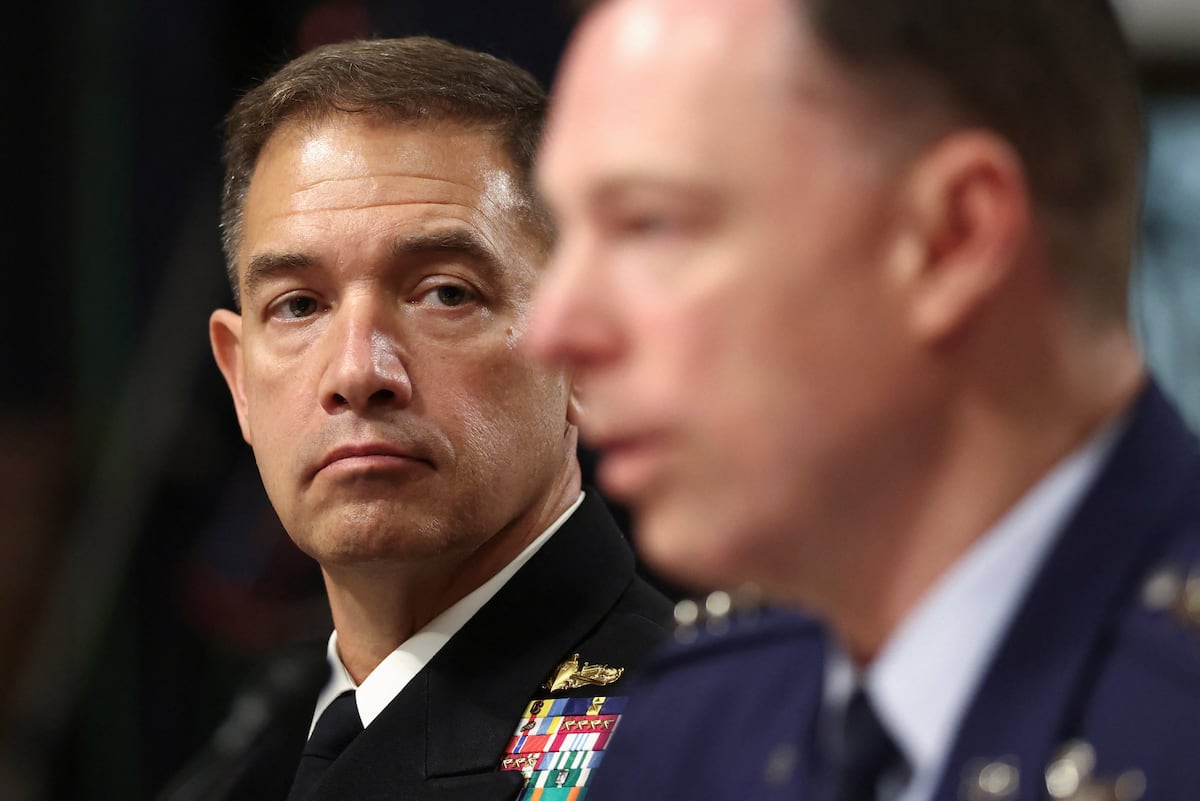
Caption: U.S. military leaders testify to lawmakers on the outcomes of recent operations against Iran | Credits: Kevin Lamarque/Reuters
Geopolitical impact: Short-term containment, long-term instability, and policy choices
In the near term, the operational effects described by CENTCOM reduce the immediacy of certain conventional threats to regional partners and U.S. forces, and complicate Tehran’s ability to project power outward through state-to-state strike capabilities. That diminution, however, does not eliminate strategic risk. Three enduring vulnerabilities merit attention:
1) Maritime and commercial disruption: Even degraded capabilities can be militarized as political tools. Threats of renewed mine-laying, asymmetric interdiction, or episodic strikes create persistent volatility for global energy shipments and raise transaction costs through insurance and rerouting—imposing broader economic and diplomatic pressures.
2) Proxy warfare and deniable coercion: CENTCOM’s assessment that Iran’s proxies have been cut off from support would, if sustained, blunt Tehran’s regional influence. Yet proxies operate through diffuse logistics and external sanctuaries; reconstitution of resupply or indirection of materiel through third parties remains plausible absent robust, verifiable interdiction and diplomatic pressure.
3) Intelligence and verification gaps: Discrepancies between public reporting and CENTCOM claims—particularly on retained missile stocks—underscore the challenge of accurate, timely assessment. Command-and-control disruption may be as consequential as hardware losses, but quantifying restoration risks requires continuous intelligence, on-the-ground HUMINT, and open-source corroboration.
Policy implications are clear. Military gains from a concentrated campaign must be consolidated through sustained maritime security, multinational convoy and escort arrangements, and targeted interdiction of logistics lines supporting proxy groups. Parallel diplomatic initiatives to create credible off-ramps are necessary to reduce escalation risk; absent them, the standoff in the Strait of Hormuz risks entrenchment into a protracted low-intensity conflict that periodically threatens wider escalation. Finally, U.S. and allied strategy should prioritize transparent, joint assessments to align public claims with observable effects—both to preserve strategic credibility and to shape regional partners’ risk calculations.