
Israel’s decision to develop external fuel tanks for its domestically modified F-35I Adir signals a deliberate push to expand aerial reach and operational flexibility amid heightened tensions with Iran; the move blends technical adaptation, industrial sovereignty and strategic signaling, with implications for regional deterrence, escalation dynamics and alliance management.
Operational overview: extending reach for the Adir fleet
Jerusalem has commissioned a program to give its F-35I fleet extended range by adapting external fuel tanks derived from an existing design used on Israel’s F-16I Sufa. The contract, awarded to Elbit Systems and valued at roughly $34 million, covers development work to integrate add-on tanks with the Adir’s Israeliized avionics and electronic warfare suite. Israel fields about 50 F-35Is across two squadrons, is receiving an additional batch of 25 jets ordered in 2023, and is negotiating for 25 more — a potential increase to four squadrons and a total strength near 100 aircraft. The step follows recent long-range operations, including the Israeli strikes inside Iranian territory during Operation “Lion’s Roar,” and comes at a moment of fragile de‑escalation between Tehran and Washington.
Historical backdrop: Israel’s airpower adaptation and contested reach
Enhancing range is consistent with a decades-long Israeli pattern of tailoring Western platforms to local operational concepts and strategic needs. From early modifications of American fighters to Israel’s unique avionics, sensors and electronic warfare packages, the IAF has repeatedly pursued sovereign upgrades to offset geographic constraints and proliferating regional threats. The Adir program itself represents a fusion of U.S. fifth‑generation airframe capability with Israeli mission systems. Recent combat events — notably the first combat air‑to‑air kill by an F-35I during strikes attributed to Israel deep inside Iran — have reinforced demand in Israeli defense circles for longer reach and loiter time to enable penetration, stand-off fires and more flexible mission profiles without sole reliance on forward basing or aerial tankers.
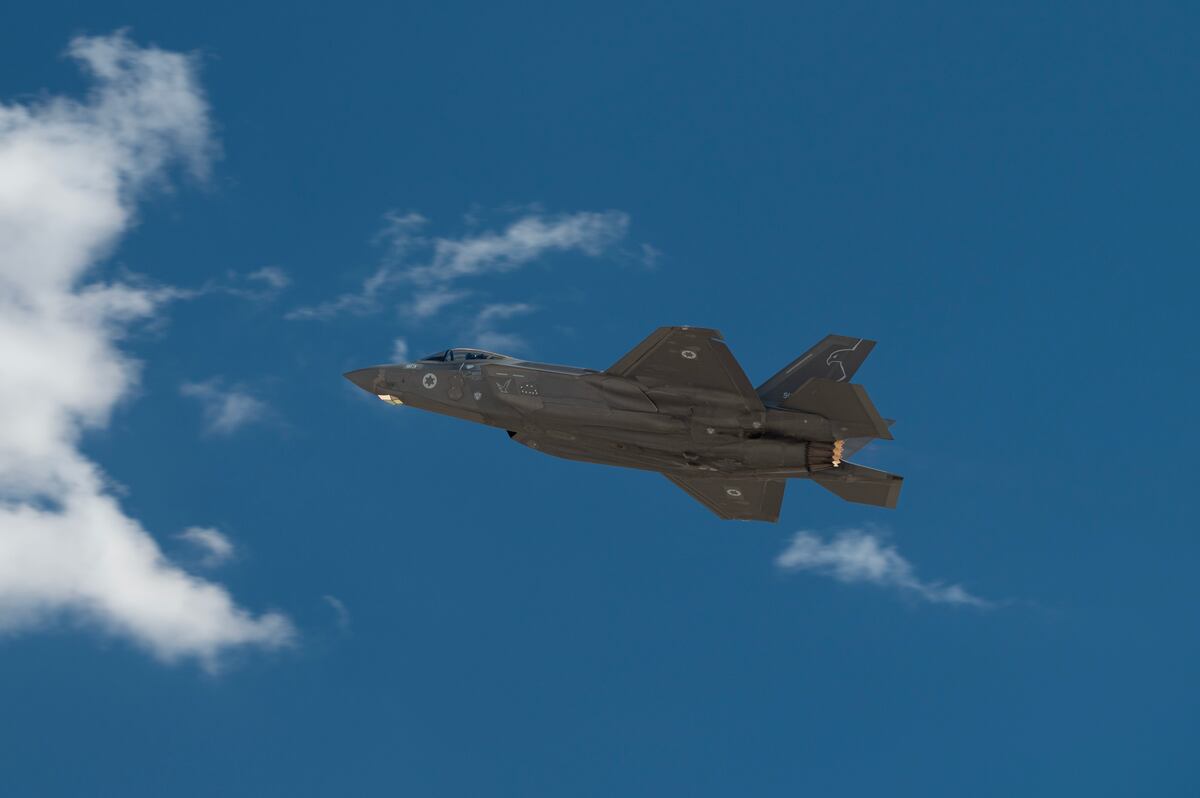
Caption: Israeli F-35I Adir departing during training exercises, illustrating operational readiness and range-focused adaptations | Credits: William R. Lewis/U.S. Air Force
Strategic implications: deterrence, vulnerability trade-offs and regional ripple effects
Extending the Adir’s range is a force-multiplier with multiple strategic effects. First, it strengthens Israel’s deterrent posture by enlarging the set of Iranian targets reachable from Israeli bases or standoff positions, reducing operational dependence on fragile aerial-refueling chains or forward staging. Second, the use of external tanks involves a trade-off: while tanks increase endurance and transit distance, they can degrade stealth and sensor effectiveness relative to fully internal loads, thereby shaping mission planning toward mixed concepts of operations — clandestine internal-carriage strikes when stealth is essential, and external‑tank configurations when reach matters more than low observability.
Third, the program reinforces Israel’s model of national industrial integration into advanced platforms, preserving rapid modification cycles and operational sovereignty — an attribute Washington has tended to accommodate but that carries continuous export‑control and interoperability sensitivities. Fourth, on the regional balance, an Adir fleet with greater reach complicates Iranian defense calculations and elevates the stakes for proxy and missile responses: Tehran may accelerate hardening, dispersal, or investment in longer‑range air defenses and anti-access systems, and could intensify asymmetric operations against Israeli or partner assets across the region.
Finally, politically, the capability upgrade sends a calibrated message to allies and adversaries alike. For partners it underscores Israel’s ability to act independently if necessary; for Iran it is a deterrent signal designed to raise the perceived cost of escalation. The net risk is a modest increase in crisis instability: deeper strike options may deter some forms of aggression but also broaden the menu of preemptive or retaliatory pathways, requiring careful diplomatic management with the United States and regional actors to avoid inadvertent escalation.