
Libyan forces from opposing administrations training together in Turkey for a second time in weeks represents a tangible, if fragile, movement toward military rapprochement — one that carries operational, political and regional consequences far beyond the parade ground in İzmir.
Current Situation: Joint Training in Turkey Signals Tactical Rapprochement
The EFES-2026 exercise, coordinated by Turkey’s Aegean Army Command, brought personnel from both the Tripoli-based Government of National Unity and the Tobruk-aligned Libyan National Army into the same multinational training framework. Official participation figures — roughly 331 personnel from eastern Libya and 177 from western Libya, plus the fast-attack craft Shafak — underscore a modest but concrete degree of engagement. This marks the second recent episode of joint activity after both sides also took part in the U.S.-led Flintlock-2026 events in Sirte and Côte d’Ivoire. The exercises comprised a computer-assisted command-post phase (11–17 April) and scheduled live activities in İzmir (20 April–21 May), providing practical interoperability exposure for units that have long operated on separate command and logistics footprints.
Historical Background: Libyan Divisions and Past International Engagements
Since the 2011 collapse of Libya’s central institutions, the country has been fractured between competing authorities, militias and external patrons. Efforts to weld separate forces into unified national structures have repeatedly stalled amid competing visions for the state, shifting international alignments, and episodic battlefield escalations. Over recent years Turkey has positioned itself as a central external actor advocating for a unified Libyan military under the rubric “One Army, One Libya,” while other regional players have backed rival actors. Multinational exercises and committees — including the 3+3 Libyan Joint Military Committee and AFRICOM’s Flintlock series, which for the first time saw joint Libyan operating locations — constitute a growing set of external and local mechanisms aimed at building confidence and practical cooperation where political accords have been fragile.
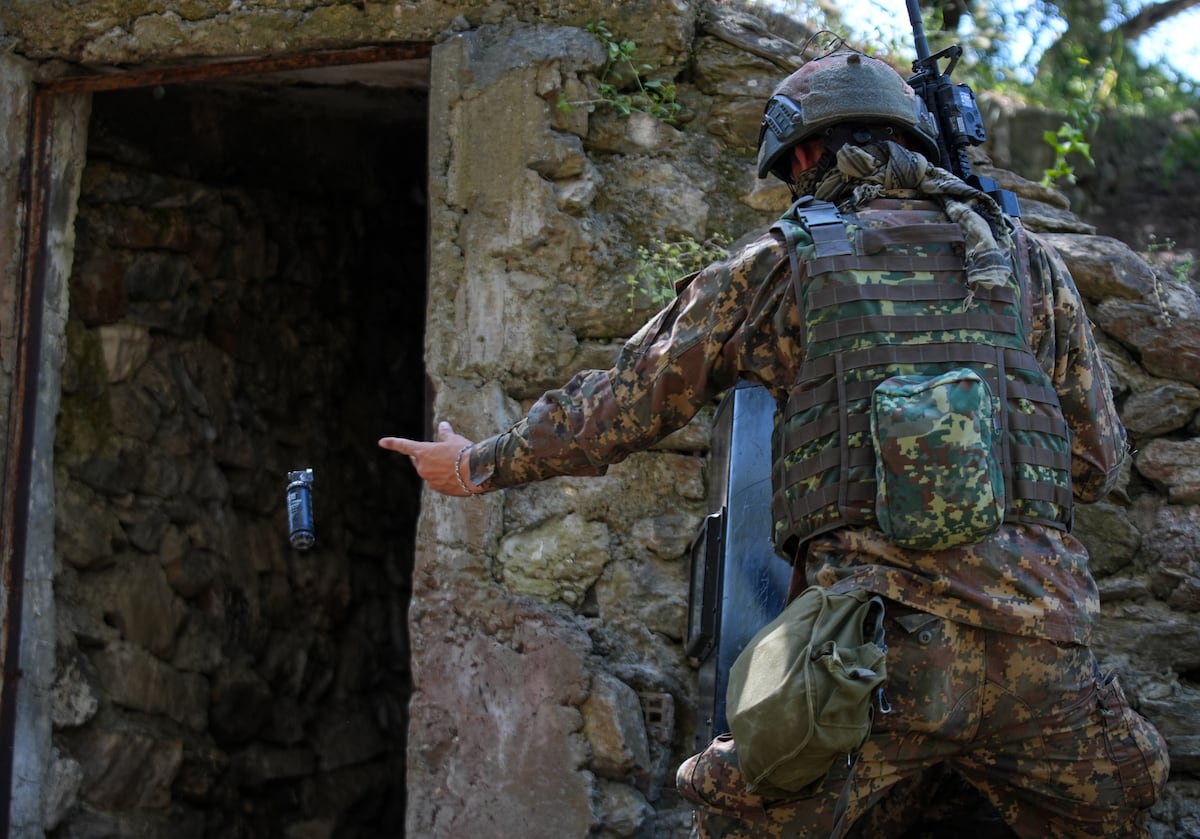
Caption: Military personnel from multiple countries, including eastern and western Libyan contingents, participate in EFES-2026 in İzmir | Credits: Berkan Cetin/Anadolu via Getty Images
Geopolitical Implications: Regional Power Plays and Risks to Stability
The repetition of joint training events has three principal implications. First, operationally, regularized exercises can create the technical foundations for integrated command, logistics and doctrine — prerequisites for any sustainable security-sector unification. Second, strategically, Turkey’s facilitation enhances its leverage in Libya’s future security architecture and signals Ankara’s commitment to shaping outcomes favorable to Libyan unity and to its own regional posture. Third, politically, the optics of east–west cooperation may lower tensions and open windows for diplomatic progress, but they also risk provoking countermeasures from external actors invested in the status quo or in alternative patrons.
Key risks remain. Participation figures are modest relative to the scale of Libya’s armed actors, and training does not automatically translate into political alignment or centralized authority over militias. Spoilers within military hierarchies, continued foreign arms flows, and unresolved command-and-control questions could quickly erode gains. For external policymakers, the prudent course is to sustain multilateral support for confidence-building measures, condition assistance on transparency and accountability, and dovetail military-to-military initiatives with robust political mediation — including UN-led tracks — to convert tactical cooperation into durable institutional reform and national reconciliation.