
The Pentagon has publicly affirmed that a designated corridor through the Strait of Hormuz remains safe for transiting vessels despite the confirmed presence of naval mines, a tactical reassurance that masks persistent operational constraints and the broader strategic fragility of a vital global chokepoint.
Current operational snapshot: secure corridor amid mine hazards
U.S. defense officials have declared an available lane for commercial transit south of the established traffic separation scheme, coordinated with Omani authorities and supported by CENTCOM escorts under a mission labelled Project Freedom. That assurance is explicitly conditional: mines have been detected in or near the traditional lanes, and portions of the strait are still "extremely hazardous" until comprehensive survey and clearance operations are complete.
Operationally, the U.S. is relying on a mix of assets—Arleigh Burke-class destroyers, littoral combat ships (LCS) equipped with mine countermeasures (MCM) packages, and Avenger-class minesweepers moved into the theater—to detect and, when necessary, neutralize threats. Readiness is constrained by maintenance cycles and fleet posture: several LCS MCM-capable vessels have been temporarily redeployed for upkeep, and regional mine-countermeasure capacity was reduced following the 2025 decommissioning of Bahrain-based minesweepers. Those factors limit surge clearance capacity and lengthen the timeline for assuring fully surveyed safe passages.
Historical background: the Strait’s strategic role and the history of mining
The Strait of Hormuz has long been a focal point for maritime competition because it channels a significant share of global hydrocarbon exports through a narrow, easily contested waterway. Non-state actors and state navies have repeatedly leveraged mines and small-boat tactics in the Gulf to exert control, raise the cost of adversary operations, and create ambiguity over attribution and proportional response.
Iranian use of naval mines has been a recurring feature of regional coercion strategies, and preexisting assessments as of 2025 estimated substantial mine inventories. The strategic calculus driving mine employment is straightforward: relatively low-cost munitions can threaten high-value commercial and military shipping, forcing adversaries to allocate disproportionate resources to countermeasures and convoy protection.
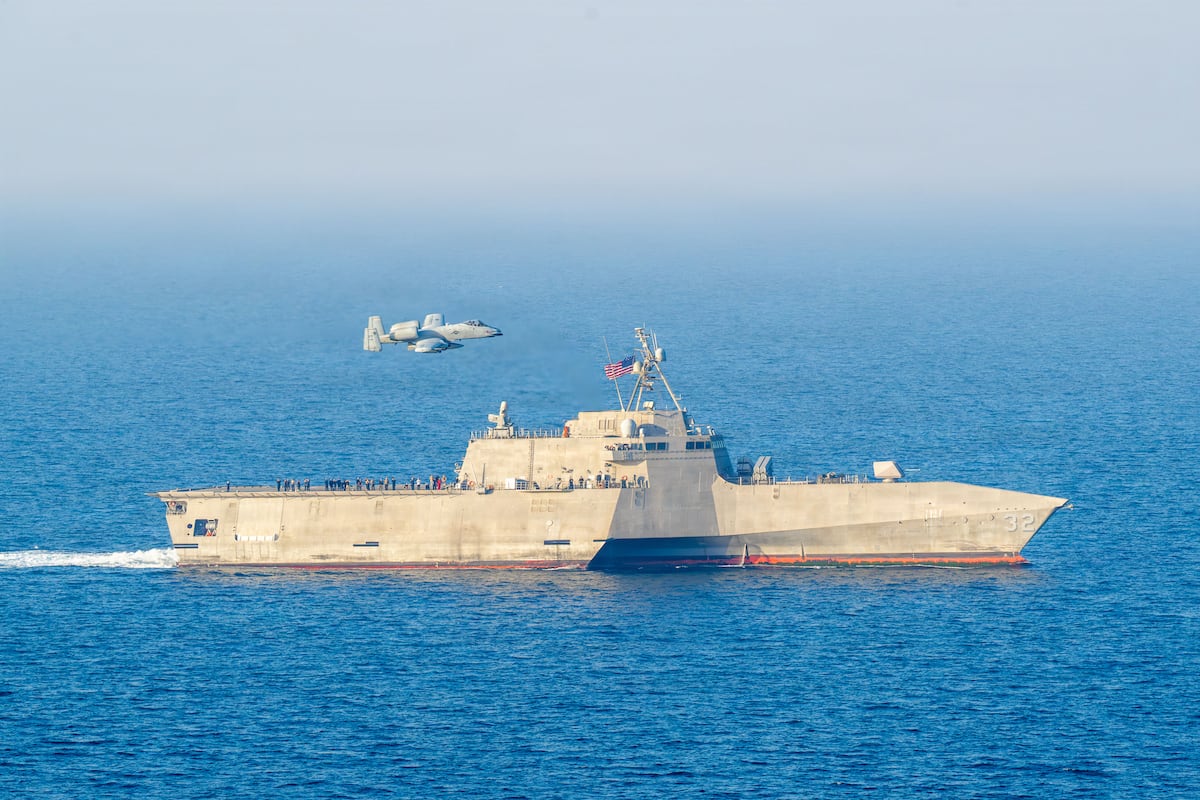
Caption: USS Santa Barbara conducts mine-countermeasures training in the Arabian Gulf, demonstrating U.S. focus on keeping shipping lanes open | Credits: MCS2 Iain Page/U.S. Navy
Geopolitical consequences: trade security, escalation dynamics, and alliance burden-sharing
The immediate diplomatic and economic consequence of continued mine threats is elevated shipping risk and increased insurance and transit costs for a waterway that remains central to energy markets. Any sustained disruption would ripple through global supply chains, raise energy prices and force commercial carriers to reroute, compounding transit times and costs.
Strategically, the situation heightens escalation risks. Mines create ambiguous attacks that complicate attribution and can drive miscalculation between regional actors and external powers engaged in escort and clearance operations. The U.S. declaration of a secure lane functions as a deterrent signal intended to reassure partners and commercial operators while constraining Tehran’s capacity to claim operational success from intermittent attacks.
Operational shortfalls—ships out of theater for maintenance, decommissioned regional MCM platforms, and constrained redeployment timelines—underscore a policy imperative: mine-threat environments demand persistent, distributed, and interoperable MCM capabilities. Practically, that means greater burden-sharing with regional partners and allies, pre-positioning of specialized assets, and investment in unmanned and remote systems that can reduce risk to personnel and increase clearance tempo.
Diplomatically, coordination with Oman and other littoral states is crucial to preserve freedom of navigation without broadening the conflict. Longer term, sustained mine threats will likely accelerate allied maritime cooperation, influence naval basing decisions, and push consumer states to diversify energy and trade routes to reduce exposure to single-point chokepoints.