
The U.S. Marine Corps’ decision to embed computerized brain-function evaluations into routine medical records marks a tangible shift from ad hoc monitoring toward systematic neurological surveillance—driven by congressional scrutiny of blast-related brain injuries, near-term mitigation measures in training, and an unfolding effort to translate biometric data into force-management policy.
Immediate policy change: Integrating cognitive screening into Marine health records
The Corps has initiated a phased rollout of Automated Neuropsychological Assessment Metrics (ANAM) testing for personnel deemed at elevated risk of blast overpressure exposure, with baseline evaluations already in place for weapons instructors, range staff and other high‑exposure roles. By September the service plans to incorporate ANAM results into the annual periodic health assessment and aims to complete baseline testing for all Marines by September 2027. These moves are accompanied by procedural mitigations—distance rules for observers on ranges and requirements to reassess acceptable overpressure thresholds, currently set at 4 PSI, with an evidence review and threshold update slated for 2029. A cross‑functional working group anchored in Training and Education Command has been established to convert assessment outputs into mitigation policy, equipment guidance and training doctrine.
Historical trajectory: From battlefield blast concerns to standardized neuro-surveillance
Recognition of blast‑induced brain injury has increased over two decades, accelerated by combat experience, improved diagnostics and advocacy that drove congressional oversight. Historically, militaries relied on symptomatic reporting and episodic concussion protocols; the move to routine, computerized cognitive baselines represents a maturation toward longitudinal surveillance. ANAM and related neurocognitive batteries have precedent across services and allied forces as screening tools, but their formal incorporation into personnel health records at scale is novel: it institutionalizes a data flow linking performance metrics, exposure logs and medical readiness. The current 4 PSI working threshold reflects prior research and conservative occupational safety practice, but the Corps’ plan to revisit that limit acknowledges scientific uncertainty and the need for empirical calibration against long‑term outcomes. This initiative therefore represents both continuity with past protective measures and a break toward preventive, data‑driven risk management.
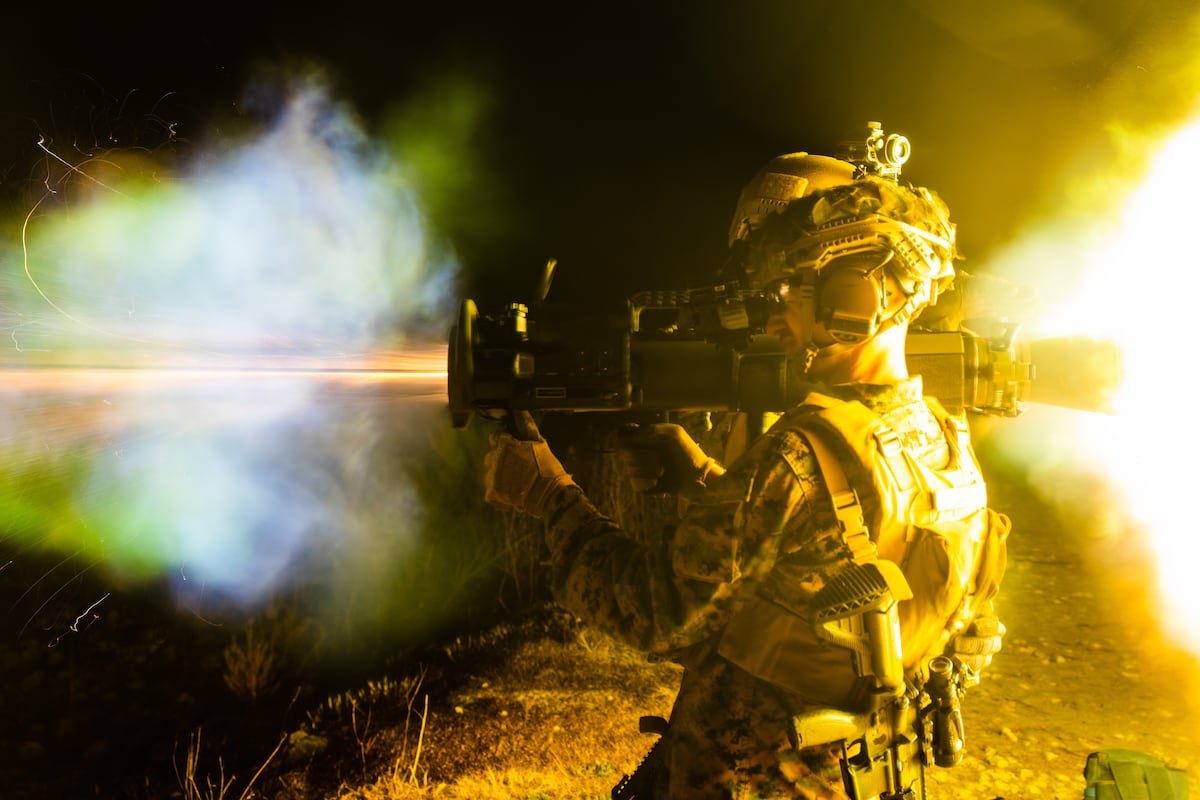
Caption: A Marine fires an M3E1 multipurpose weapon during training at Camp Lejeune, an environment driving concern over repeated blast exposure | Credits: Lance Cpl. Brian Bolin Jr./Marine Corps
Geopolitical and readiness implications: Force posture, alliances, and the defense industrial base
Operationally, systematic brain‑function monitoring reshapes readiness management. Objective cognitive baselines enable earlier detection of impairment, inform return‑to‑duty decisions and create a record for cumulative exposure—improving individual safety but also potentially constraining unit availability if thresholds or screening periodicity produce higher temporary non‑deployability. The Corps’ emphasis on mitigation “without reducing warfighting capability” underscores a balancing act: implementing protective measures (distance rules, training aids, PPE standards) while preserving essential close‑quarters weapons training.
At the strategic level, the initiative has multi‑dimensional implications. First, it signals to allies and partners that the U.S. is prioritizing long‑term force health amid evolving threats and munitions effects; this can catalyze harmonization of blast‑exposure standards in coalition training and interoperability frameworks. Second, it alters procurement priorities—creating demand for low‑overpressure weapon designs, advanced personal protective equipment, digital training simulators and blast‑exposure sensors—thus shaping defense industrial strategies and international supply chains. Third, the data produced will inform doctrine and legal risk calculations: comprehensive medical records tied to exposure may influence veterans’ compensation claims, congressional oversight, and public perceptions of combat service costs.
Finally, the Corps’ policy trajectory will be watched by peer services and NATO partners. A transparent, evidence‑based recalibration of exposure thresholds could establish new norms for acceptable blast risk, with geopolitical ripple effects in coalition training standards, multinational exercises and equipment interoperability. Conversely, uneven adoption across partners could complicate joint operations if standards diverge. The Marine Corps’ approach—combining surveillance, range management and cross‑disciplinary policy development—positions it to lead on this issue, but success will depend on rigorous science, clear governance of health data, and careful management of the operational trade‑offs between protection and combat readiness.