
The Pentagon’s public accounting that Operation Epic Fury has consumed roughly $25 billion — driven overwhelmingly by munitions expenditure — reframes a short but intense campaign into a problem set of finance, logistics, and strategy: a high-tempo kinetic campaign funded from US budgets, producing clear casualty and readiness consequences while testing the limits of alliance cohesion and Washington’s ability to translate tactical success into durable strategic gains.
Current Operational Overview and Cost Assessment
Operation Epic Fury, initiated after a joint U.S.-Israeli strike on Feb. 28, has evolved into a materially expensive campaign in just eight weeks. The Department of Defense’s acting comptroller reported an approximate $25 billion outlay to date, with the dominant share allocated to ordnance and associated replenishment. U.S. military losses and injuries — reported at 13 dead and roughly 400 wounded — have added a human cost dimension that amplifies political scrutiny at home. Senior leaders have signaled a forthcoming supplemental funding request once a fuller financial accounting is produced, placing Congress at the center of the next phase of resource allocation and political debate.
Origins, Precedents, and Operational Context
The current conflict must be read against a historical pattern in which kinetic operations directed at preventing nuclear acquisition create immediate pressure points across defense budgets and regional security architectures. The campaign’s origins — a coalition kinetic action involving Israel and the United States — reflect a policy decision to disrupt perceived nuclear pathways through force rather than deterrence alone. Previous episodes of intense ordnance expenditure (Gulf-era high-tempo operations and episodic counter-proliferation strikes) show that munitions-driven spending produces two predictable outcomes: a short-term operational advantage and a medium-term readiness gap as stocks and maintenance pipelines are taxed. The political context is also significant: this represents the first public numeric disclosure by this administration of the war’s fiscal toll, and leaders have framed the campaign as necessary to deny Iran a nuclear capability. That rationale will shape domestic messaging even as battlefield realities and diplomatic channels evolve.
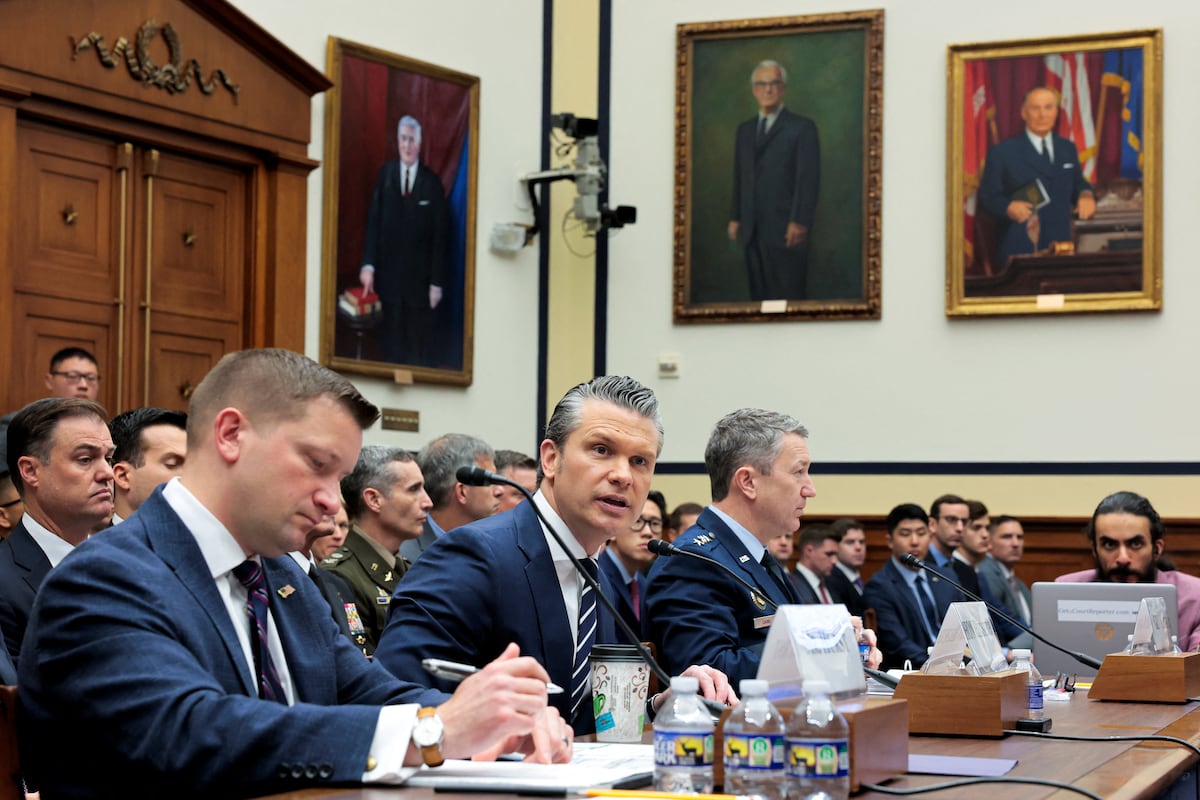
Caption: High-level Pentagon testimony highlighted campaign costs and munitions usage amid congressional questioning | Credits: Kylie Cooper/Reuters
Regional Dynamics and Strategic Consequences
The disclosed fiscal figure crystallizes several strategic implications. First, high munitions consumption and the need to replenish stocks will stress U.S. defense industrial base capacity and may force prioritization or production surges that affect procurement plans across theaters. Second, sustaining a prolonged campaign risks diverting attention and resources from other strategic priorities — notably Indo-Pacific deterrence — creating opportunity costs that competitors can exploit. Third, the political calculus in Washington will be decisive: the administration’s framing of the campaign as indispensable to prevent nuclearization places pressure on Congress to provide funds, but casualty figures and rising costs increase the likelihood of contentious appropriations battles and public debate over objectives and exit criteria.
Regionally, the operation increases the risk of escalation through proxy actors and maritime interdiction, complicating relationships with Gulf partners who face direct security and economic consequences. International reactions from other major powers will be measured against their strategic interests: some will criticize U.S. action and leverage economic channels, others will hedge by offering tacit logistical or intelligence cooperation. Finally, the announcement of a supplemental request will become a diplomatic signal: it confirms Washington’s intention to continue operations at scale and forces partners and adversaries alike to adjust their calculations about the campaign’s duration and potential intensification.
Policy implications include the need to accelerate diplomatic channels to create credible exit ramps, coordinate a burden-sharing framework with allies to reduce fiscal and material pressure on U.S. stocks, and invest rapidly in munitions production and logistics sustainment. Transparent, periodic accounting to Congress and the public will be essential to maintain legitimacy for further appropriations. Operationally, commanders must balance immediate targeting objectives with long-term force readiness, while policymakers should set measurable strategic benchmarks that justify continued expenditure and define conditions for de-escalation.