
President Donald Trump’s public disclosure that he and Russian President Vladimir Putin discussed a possible temporary ceasefire in the Ukraine war during a lengthy phone call refocuses attention on diplomatic channels outside Kyiv’s direct involvement and underscores the interplay of symbolism, strategic bargaining and domestic politics ahead of May 9 — the Kremlin’s Victory Day commemoration.
Current Situation: Overview of the Trump–Putin Conversation and Ceasefire Proposal
According to statements from both the White House and the Kremlin, Trump told reporters he raised a “little bit of a ceasefire” with Putin during a friendly, businesslike call that reportedly lasted over one and a half hours. The Kremlin said Putin proposed a temporary truce to coincide with May 9, the Russian commemoration of World War II victory — a highly symbolic date that Moscow has used repeatedly to frame domestic legitimacy and wartime narratives. Moscow also reportedly offered assistance on Iran’s enriched uranium issue; Trump said he preferred Russian involvement to focus first on ending the Ukraine war.
This announcement follows precedent: Moscow declared a short truce on a prior anniversary that lasted only days and was not agreed with Kyiv. Trump’s public posture — positive toward Putin and critical of Ukrainian leadership — coupled with his suggestion that a ceasefire might be forthcoming raises immediate questions about Kyiv’s role, the form and enforcement of any pause, and how allied capitals will respond.
Historical Context: Victory Day Significance and the Track Record of Negotiations
May 9 (Victory Day) is deeply embedded in Russian national politics and has repeatedly served as a diplomatic and propagandistic lever since the 2014 Donbas crisis and the 2022 full-scale invasion of Ukraine. Historically, temporary ceasefires around religious or commemorative dates have been used by belligerents to manage optics, facilitate humanitarian actions, or buy time for operational recalibration. Past short-term truces that were uncoordinated with Kyiv demonstrate the risk that Moscow can unilaterally declare pauses that benefit its tactical or political aims without producing sustainable peace.
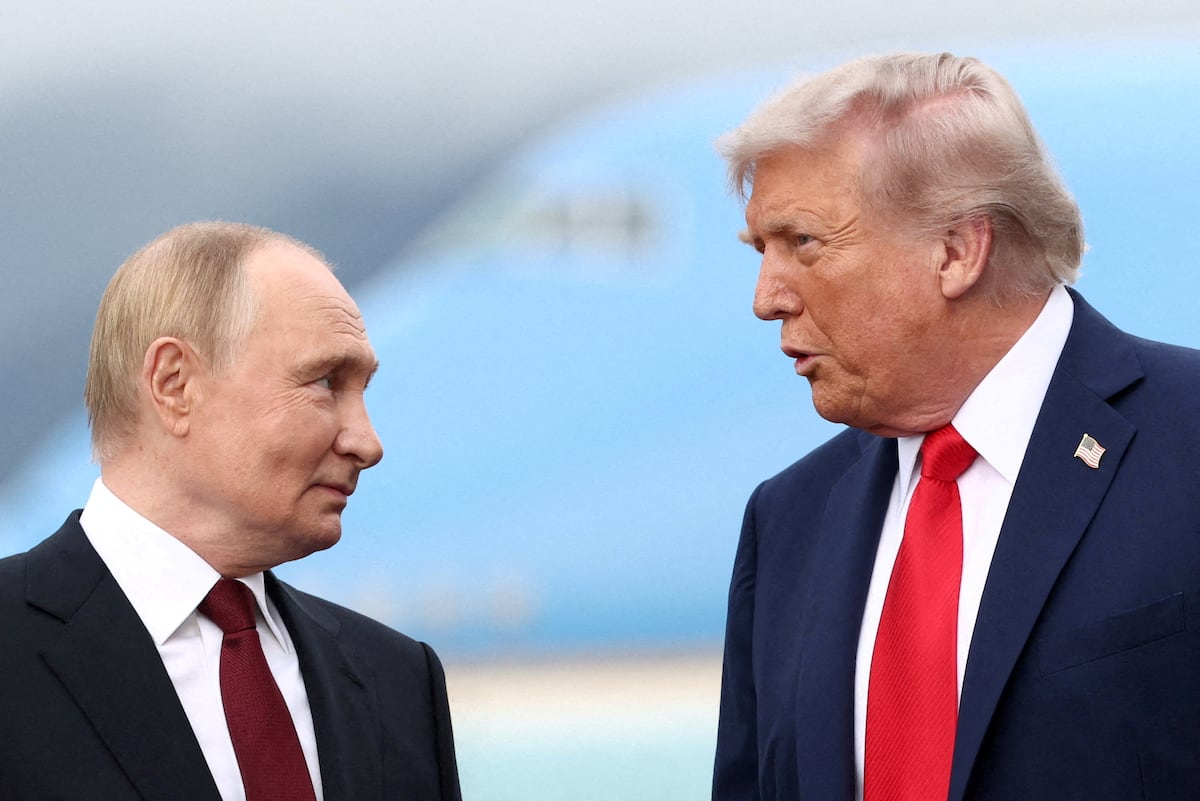
Caption: President Donald Trump speaks with Russian President Vladimir Putin during their 2025 encounter in Anchorage; the leaders later discussed a possible temporary ceasefire in Ukraine. | Credits: Kevin Lamarque/Reuters
Geopolitical Consequences: Strategic Risks, Opportunities and Likely Trajectories
Short-term implications: a symbolic, short-duration ceasefire timed to Victory Day would likely create humanitarian openings and temporary reductions in violence in selected sectors but would not resolve core political or territorial disputes. If implemented without Kyiv’s full consent and robust monitoring, such a pause risks politicization — effectively freezing battlefield lines and providing Russia breathing room to consolidate gains or reposition forces.
For Ukraine: unilateral or externally brokered pauses that exclude Kyiv would undermine Ukrainian sovereignty, strain morale, and place Ukrainian negotiators on the defensive. Kyiv will face domestic pressure to reject any deal perceived as legitimizing Russian objectives. For the United States and NATO: unilateral outreach by a U.S. president to Moscow on a ceasefire — particularly if coordinated outside allied consultations — could erode allied confidence in Washington’s commitments and complicate unified support for Kyiv, especially regarding continued military assistance and sanctions policy.
For Russia: proposing a ceremonial truce serves multiple aims — domestic legitimization around Victory Day, an opportunity to claim diplomatic initiative, and a potential operational pause that can be converted into broader political leverage. The offer to assist on Iran’s enriched uranium adds another transactional layer: Moscow can present itself as a pivotal broker on multiple crisis fronts, enhancing its diplomatic profile even as it faces sanctions and battlefield setbacks.
Assessment and likely trajectory: the most probable near-term outcome is a narrowly scoped, time-limited ceasefire around May 9 with significant caveats and limited geographic and temporal reach. Durable cessation of hostilities would require Kyiv’s agreement, third-party verification, and linkage to a broader, enforceable political process — conditions not evident from the initial public statements. Absent such safeguards, a tactical pause could harden frontline positions and complicate future negotiations.
Policy implications: any U.S. role in pursuing pauses should prioritize coordinated consultation with Kyiv and NATO, insist on verifiable mechanisms and humanitarian guarantees, and resist arrangements that could institutionalize territorial gains achieved through force. For transatlantic cohesion, transparent diplomacy and alignment with Ukrainian priorities are essential to prevent strategic divergence and to maintain the credibility of deterrence and support frameworks.