
Ukraine has converted battlefield innovation into a diplomatic tool: by exporting know-how, forging defense partnerships, and pitching itself as a practical supplier of low-cost counter-drone solutions, Kyiv has expanded its geopolitical footprint — but the credibility of this "drone diplomacy" now depends on delivering industrial scale, secure export frameworks and sustained operational performance.
Current Dynamics: Drone Diplomacy in Action
Since the 2022 invasion, Kyiv has parlayed battlefield-proven drone tactics into a string of security and industrial agreements across Europe and the Middle East. Recent accords with Germany, Norway and the Netherlands build on earlier partnerships with Saudi Arabia, Qatar, the UAE, Turkey and Azerbaijan; Ukraine has also deployed specialists to the Gulf to advise on defending against Iran’s Shahed strikes. These engagements reflect a deliberate strategy by President Volodymyr Zelenskiy to demonstrate Ukraine as a contributor of capability rather than a consumption-dependent client. At the same time, domestic export controls, concerns about technology leakage to Russia, and the limited number of approved defense export licenses have constrained urgent scaling. Kyiv faces the near-term task of turning political goodwill into sustained deliveries while protecting the intellectual and operational value of its wartime systems.
Historical Roots and Evolution of Ukraine's Drone Strategy
Ukraine’s drone doctrine developed under wartime pressure, producing inexpensive, highly practical countermeasures and attack variants that compensate for gaps in conventional air defenses. Where high-end systems such as the U.S. Patriot were unaffordable or scarce, Ukrainian forces innovated layered defenses—interceptor FPV drones, improvised kinetic solutions, jamming suites and skilled human operators—to blunt massed propeller and loitering munitions. Parallel work produced long-range strike drones that targeted energy infrastructure, reshaping operational options for Kyiv. This pragmatic, process-driven approach delivered rapid returns on the battlefield but differs from decades-long programs that produced systems such as the PAC-3. Ukraine’s defense industry now employs hundreds of thousands and reports spare production capacity in some segments, but historically tight export rules and IP protection instincts have limited the conversion of capacity into international sales.
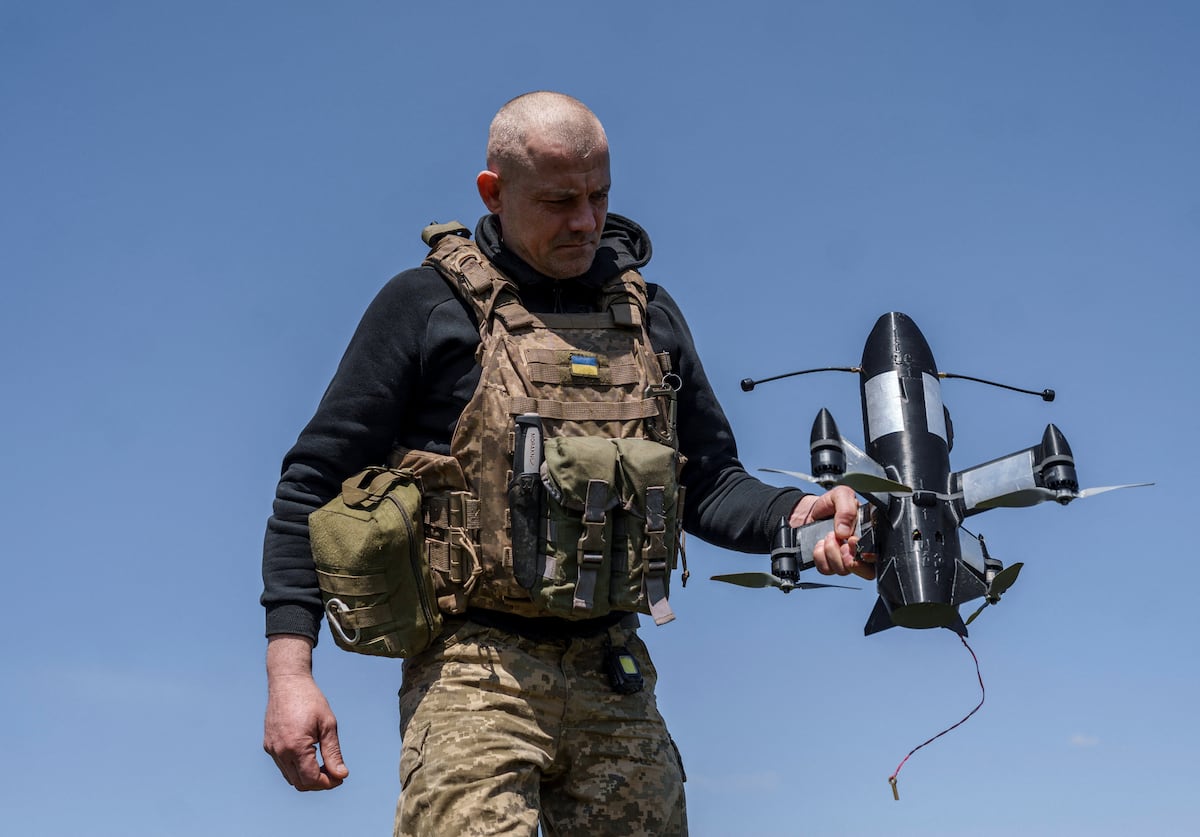
Caption: Ukrainian soldier prepares a P1-Sun FPV interceptor drone for launch near the Donetsk front, April 26, 2026. | Credits: REUTERS/Serhii Korovainyi
Strategic Consequences and Risks
Ukraine’s drone diplomacy produces tangible geopolitical dividends: diversification of partners beyond Washington, entry into energy and defense markets in the Gulf, and enhanced leverage when negotiating security guarantees. It also creates potential economic uplift through exports and foreign manufacturing partnerships that could lessen long-term dependence on Western aid. Yet the strategy carries distinct risks. Operational knowledge is the primary commodity, and sharing it too widely could erode Kyiv’s battlefield advantage or be reverse-engineered by adversaries introducing faster, jet-powered threats. The gradual arrival of higher-speed drones underscores the limits of human-operated interceptors and the urgency of investment in autonomy and sensor fusion. Domestic export controls must be reformed to enable exports while mitigating diversion to Russia; joint production and carefully structured licensing are likely the safest path to monetizing capacity without compromising security. Finally, Ukraine’s wider security calculus reflects anxiety about U.S. prioritization of other theaters: success of drone diplomacy depends on sustaining U.S. and European political support while expanding practical cooperation with the Gulf and other partners. To consolidate gains, Kyiv should (1) streamline export licensing with clear safeguards, (2) protect core IP via limited, conditional partnerships, (3) accelerate investments in autonomous interceptors and training pipelines, and (4) negotiate cooperative missile-defense programs with European allies — pragmatic steps that turn diplomatic openings into durable strategic capability.