
The U.S. Air Force's Project Able Baker, which seeks to convert decommissioned offshore oil platforms into Sea-Based Recovery Stations for reusable heavy-lift rockets, represents a pragmatic intersection of aerospace logistics, maritime infrastructure reuse, and strategic competition in space access. If pursued at scale, the initiative could reshape launch and recovery architectures, accelerate launch cadence, and spark new regulatory, environmental and security debates across the maritime and space domains.
Program Overview and Immediate Situation
Project Able Baker is being advanced through a Small Business Innovation Research solicitation to assess the technical and economic feasibility of adapting aging oil platforms into reinforced landing and recovery sites for boosters from major launch providers and the U.S. Space Force. The effort is explicitly framed to reduce dependence on costly custom drone ships, increase operational tempo, and repurpose legacy offshore assets before they become environmental liabilities. Technical requirements listed in the solicitation include substantial structural reinforcement to withstand plume and point-load effects, active and passive flame deflection, remote fire suppression, precision navigation aids for autonomous landings, and integrated systems for moving recovered boosters to transit vessels. The program foresees a two-phase approach: (1) structural, environmental and regulatory feasibility analyses, including sonic-boom and ecosystem impact studies and identification of candidate platforms; and (2) on-deck validation of modular retrofit kits using inert-mass drops or static-fire simulations to capture strain, vibro-acoustic and plume interaction data.
Evolution of Sea-Based Space Operations and Platform Reuse
The Able Baker concept builds on two parallel historical trends: the rapid maturation of reusable rocketry and the long-standing practice of repurposing offshore infrastructure. Reusable launch vehicles have moved recovery from theoretical to routine operations, first demonstrated through barge and drone-ship recoveries and progressively refined by commercial providers. Separately, the environmental and economic challenges of decommissioning offshore platforms have given rise to “rigs-to-reefs” programs and other adaptive uses for aging installations. Maritime launch and recovery experimentation is not new—commercial ventures have previously exploited sea-based platforms to gain flexibility in orbital inclination and range—but Able Baker would represent a new hybrid: distributed recovery nodes optimized for routine, high-cadence operations rather than single-purpose launch pontoons. The solicitation’s emphasis on regulatory roadmaps and ecosystem alignment reflects decades of legal and ecological precedent governing the Outer Continental Shelf, while the experimental validation steps (10–25 ton inert drops and vibro-acoustic monitoring) indicate the technical rigor required to bridge oil-platform design and modern rocket load cases. Concurrent developments abroad—most notably China’s own offshore recovery platform projects—underscore that sea-based recovery is becoming an arena of international technological convergence and competition.
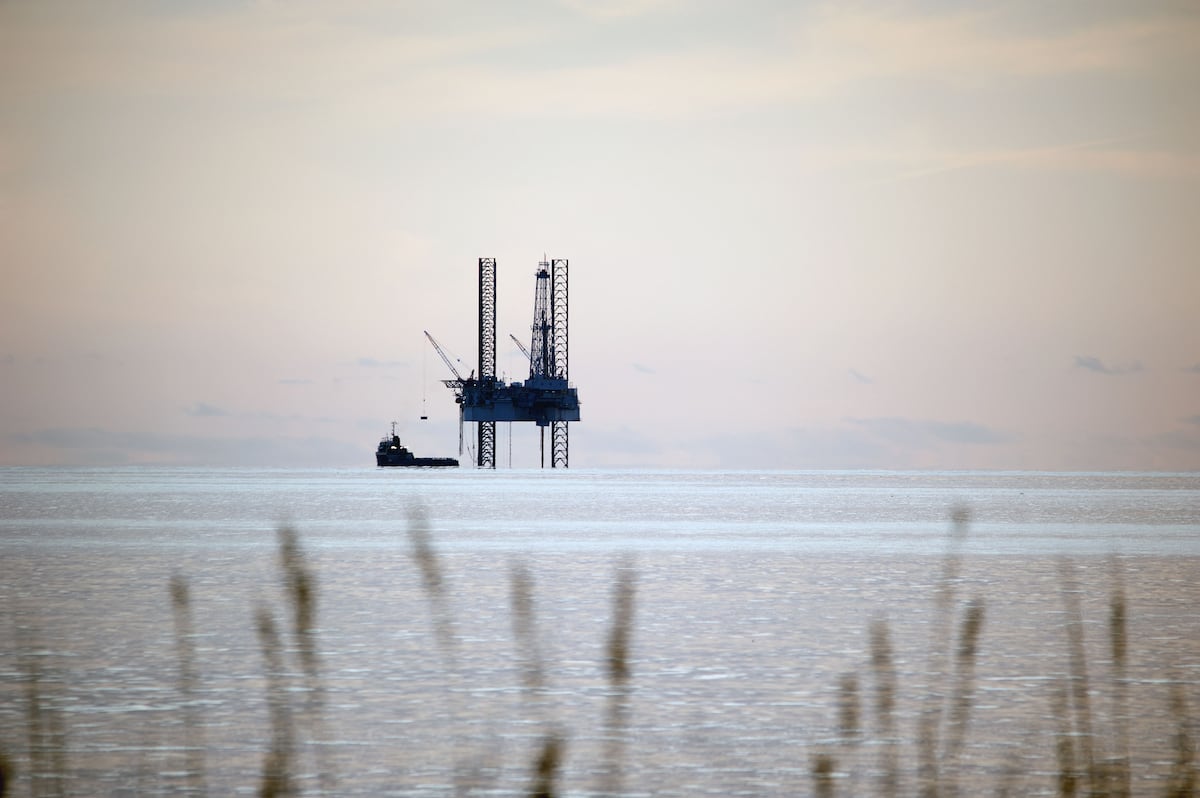
Caption: Decommissioned Gulf of Mexico oil platform similar to candidates for conversion into sea-based rocket recovery stations | Credits: Jim Julien/Universal Images Group via Getty Images
Strategic Consequences and Geopolitical Implications
Operationally, a dispersed network of Sea-Based Recovery Stations would materially increase launch resilience and cadence by decentralizing recovery assets and reducing the scheduling and transit constraints of ship-based retrieval. For the United States, the capability would support tactically responsive space missions, enable faster replenishment of constellation assets, and reduce reliance on single coastal launch corridors that are vulnerable to weather, range conflicts and localized opposition.
Geopolitically, the program carries several implications. First, it tightens competition with state-backed programs—China’s offshore recovery initiatives illustrate how sea-based concepts can quickly translate into strategic parity in space logistics. Second, operating semi-permanent recovery infrastructure at sea blurs civil-commercial and military lines: while framed as logistics and environmental remediation, the infrastructure has dual-use utility that could complicate basing perceptions and raise concerns among regional actors and maritime stakeholders. Third, the dispersed nature of sea-based stations increases demands on maritime domain awareness, force protection and regulatory harmonization; escorting recovered boosters, securing sensitive telemetry and preventing interference will impose recurring naval and coast guard burdens.
Environmentally and politically, the project must navigate competing constituencies. Reusing platforms can lower decommissioning costs and preserve reef habitats if aligned with proven rigs-to-reefs practices, but sonic-boom exposure, plume deposition and ship traffic changes create local externalities that will attract NGO scrutiny and potentially litigation. Legally, operations will require coordination with federal agencies managing the Outer Continental Shelf, harmonization with international maritime norms for operations in Exclusive Economic Zones, and a clear regulatory posture to avoid domestic or bilateral disputes over coastal impacts.
Economically, retrofit and sustainment work offers industrial opportunities for U.S. shipyards, offshore engineering firms and SMBs bidding under SBIR awards, strengthening the domestic space–maritime industrial base. Conversely, if adversaries replicate or export similar capabilities to allied waters, the initiative could spur a new front in infrastructure competition—platforms as distributed logistics nodes for space and, potentially, contested access in peacetime and crisis.
In sum, Able Baker is more than an engineering exercise; it is a strategic experiment at the intersection of maritime policy, environmental stewardship and space competition. Successful demonstration would yield tangible operational gains and exportable concepts for allied cooperation, while also raising complex legal, security and ecological questions that will shape norms for sea-based space operations in the coming decade.