
Two U.S. service members went missing near Tan Tan in southern Morocco during the multinational African Lion exercises, triggering a coordinated search-and-rescue response by U.S., Moroccan and partner forces; the incident, occurring near the Cap Draa training area and reportedly close to a cliff, is under investigation and carries immediate operational and longer-term geopolitical consequences for U.S. engagement in North and West Africa.
Incident Overview and Ongoing Response
According to official statements from U.S. Africa Command and the Moroccan Royal Armed Forces, two American service members were reported missing during the African Lion drills, prompting combined ground, air and maritime search operations. The main search focus is the Cap Draa training area near the city of Tan Tan, and Moroccan authorities have indicated the missing personnel were last known to be near a cliff. The exercise continued across multiple locations in the region, but authorities have emphasized that search-and-rescue efforts and an investigation into the circumstances are active priorities.
Operationally, responses have involved both Moroccan and U.S. assets and coordination with other participating nations. Such joint search procedures are standard for large-scale exercises, reflecting both immediate tactical imperatives—locating and recovering personnel—and the organizational need to review safety, communications and risk-mitigation practices in complex, multinational training environments.
Historical Context: African Lion and U.S.–Morocco Military Cooperation
African Lion is the largest recurring exercise run by U.S. Africa Command and is designed to improve interoperability between U.S. forces, NATO allies and African partner militaries. The drill spans multiple countries—this iteration taking place across Ghana, Morocco, Senegal and Tunisia—and in recent years the Moroccan component has been the largest single-element, embedding thousands of troops from scores of nations. Morocco has long been a key security partner for the United States in North Africa, hosting training, logistics and cooperative counterterrorism activities that project stability across the western Mediterranean and southern flank of Europe.
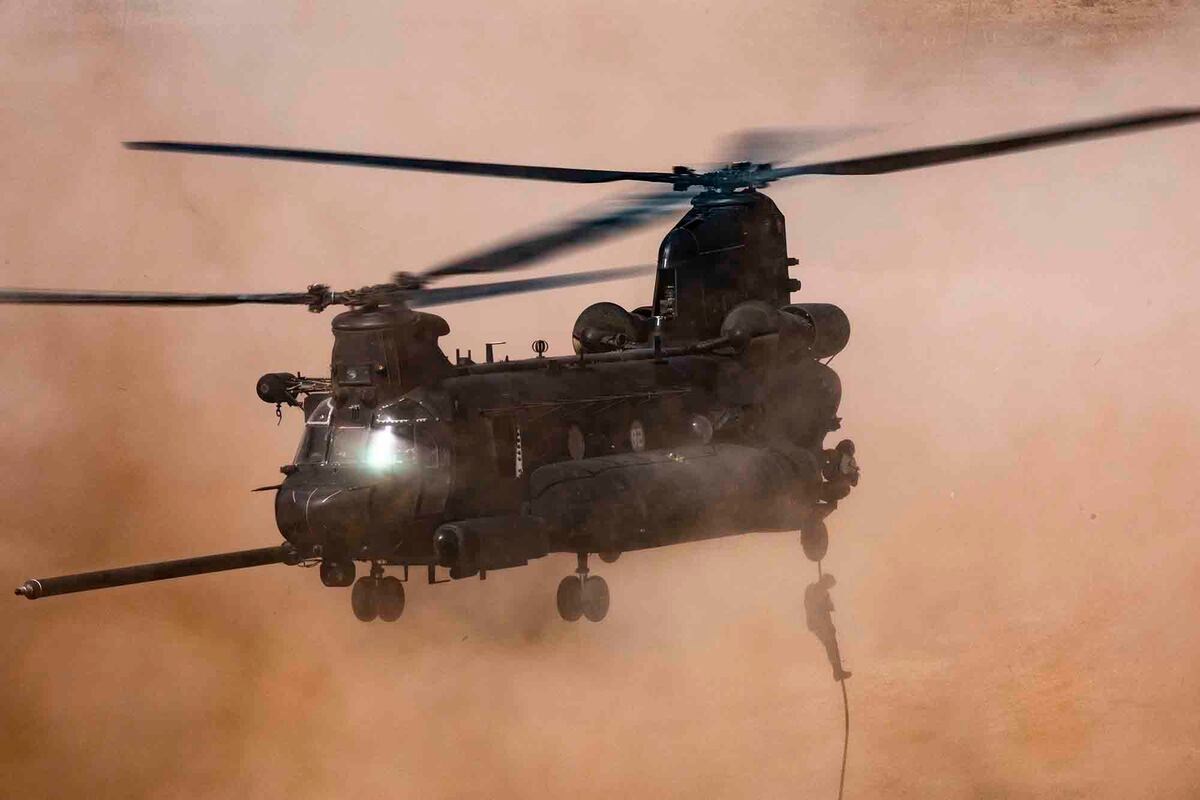
Caption: U.S. and Moroccan forces train together during African Lion exercises; operations often involve complex terrain and ship-to-shore or air insertion drills. | Credits: Spc. Brendan Nunez/Army
Geopolitical Implications and Risk Assessment
The disappearance of U.S. service members during a high-profile multinational exercise has several layered implications. In the near term it places operational emphasis on force protection, search-and-rescue readiness and interpartner command-and-control effectiveness; perceived shortfalls in any of these areas can erode confidence among participating militaries and complicate future cooperation. Diplomatically, Morocco and the United States will seek to manage public messaging to avoid politicization while demonstrating robust bilateral coordination.
At a strategic level, African Lion serves as a signal of U.S. commitment to regional security and interoperability with African partners. Any incident that highlights safety vulnerabilities could be exploited by rival external actors seeking to question the value or effectiveness of U.S.-led security cooperation. Conversely, a disciplined, transparent investigation and an effective recovery operation would reinforce the credibility of joint operations and the resilience of U.S. partnerships in the region.
Recommendations: prioritize transparent updates to partners and families; conduct an expedited, independent review of training safety and emergency response procedures; reaffirm multinational search-and-rescue standards across participating forces; and use the after-action assessment to strengthen medical evacuation, terrain hazard mapping and real-time personnel accountability during dispersed, large-scale exercises.