
The United States’ decision to narrow the pool of forces it will make available to NATO in crises marks a deliberate pivot in transatlantic defense posture: a move designed to compel greater European burden‑sharing but one that simultaneously raises questions about deterrence, alliance cohesion, and the operational calculus that has underpinned European security since the Cold War.
Current policy shift: scaled‑back U.S. conventional commitments to NATO
The Pentagon is preparing to reduce the subset of U.S. military capabilities designated to respond under NATO’s wartime planning construct. This adjustment—announced to allies in a forthcoming defense policy chiefs meeting in Brussels and framed under the NATO Force Model—signals a clear prioritization by Washington: preserve strategic deterrence capabilities while shifting routine conventional response expectations onto European partners.
Implementation details remain opaque. Officials have tied the change to a broader U.S. policy stance that expects European states to invest more heavily in their own defense, and to assume primary responsibility for conventional operations on the continent. Publicly, senior U.S. policy actors emphasize that nuclear guarantees will remain intact even as conventional footprints evolve. Behind the scenes, decisions such as cancelling brigade deployments and cutting troop numbers underscore that this is more than rhetoric; it is an operational reallocation that will be presented as a new baseline for alliance planning.
Roots in history: alliance evolution and long‑running burden‑sharing debates
NATO’s security architecture is the product of decades of American forward presence and force projection in Europe. From the Cold War forward deployments to reassurance measures after Russian actions in 2014 and the expanded rotational posture across eastern Europe, U.S. forces have been central to deterrence and rapid reinforcement planning. Simultaneously, transatlantic debates over defense spending and capability shortfalls have recurred through multiple administrations.
The present change is part of a continuum: periodic U.S. rebalances and calls for European capability investment have often alternated with commitments to robust forward presence. What differs now is the explicit operational narrowing of the pool of U.S. assets earmarked for NATO contingencies, conveyed alongside near‑term reductions in troop levels and high‑profile political tensions with key allies. Those factors combine to create both strategic leverage and diplomatic friction that echo past disagreements over who bears the primary burden of European defense.
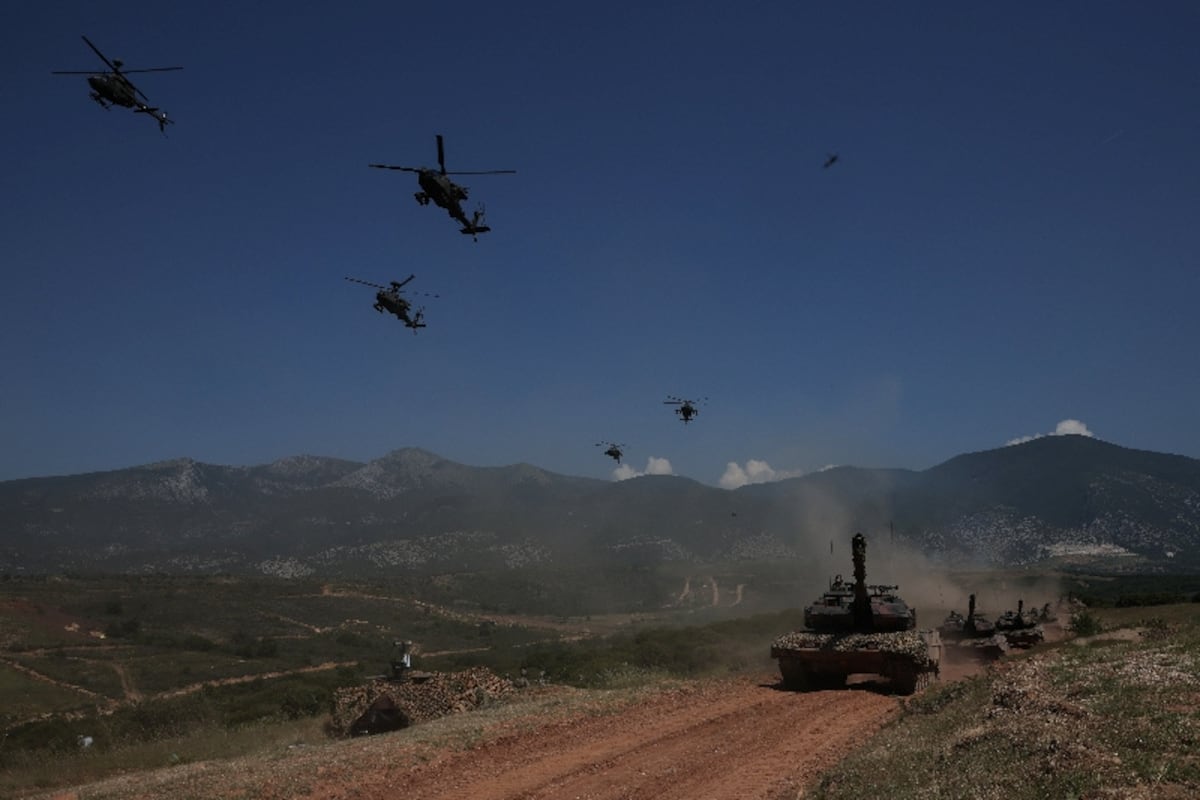
Caption: NATO troops take part in a large-scale allied exercise demonstrating interoperability and readiness | Credits: Louisa Gouliamaki/Reuters
Strategic consequences: deterrence, alliance cohesion, and regional stability
Reducing the U.S. share of the NATO Force Model will have immediate and cascading effects across strategic planning, deterrent signalling, and allied politics. In the near term, the move risks degrading perceptions of extended deterrence among vulnerable eastern European members and could embolden revisionist actors who test alliance resolve. The continued U.S. emphasis on nuclear guarantees provides a strategic backstop, but reliance on nuclear deterrence to substitute for conventional presence is a high‑risk proposition with political and escalation dangers.
For European capitals, the policy sharpens incentives to accelerate defense procurement, improve force generation, and enhance logistics and command infrastructure so they can credibly assume greater conventional responsibilities. That adjustment will produce winners and losers: states with established industrial bases and defense budgets may consolidate leadership roles, while smaller or politically fragmented members could face acute capability and credibility gaps, pressing NATO to recalibrate burden‑sharing formulas and readiness timelines.
Operationally, the change will force NATO planners to revise reinforcement timelines, prepositioning strategies, and surge concepts. Reduced U.S. contributions in select categories—whether heavy armor, long‑range fires, or specialized enablers—will require compensatory investments by allies or creative pooling of capabilities. Equally consequential are the political ramifications in Washington and on Capitol Hill, where lawmakers alarmed by rapid withdrawals and sudden cancellations may push back, complicating strategic consistency.
Longer term, the shift could catalyze a more capable European pillar—strengthening EU‑NATO cooperation and prompting defense industrial collaboration—but only if European states match rhetoric with sustained financial and political commitment. Without that follow‑through, the policy risks a twofold outcome: heightened transatlantic friction and a window of increased instability that adversaries could exploit. Clear timelines, transparency in capability adjustments, and cooperative planning mechanisms will be essential to transform a contested policy change into a managed transition that preserves credible deterrence while encouraging European responsibility.