
The USS Gerald R. Ford’s return to Norfolk after an 11‑month deployment is a focal point for assessing U.S. carrier force posture, the operational costs of sustained forward presence, and how materiel and human factors intersect with strategic signaling in contested regions.
Situation summary: Return from an unprecedented long deployment
The carrier Gerald R. Ford is scheduled to arrive at Naval Station Norfolk after more than 320 days at sea, marking the longest post‑Vietnam continuous deployment by a U.S. carrier. The carrier strike group operated in multiple theaters, including extended missions in the Middle East in support of U.S. Central Command and named operations directed at Iran, and earlier activity in the Caribbean. Leadership officials publicly framed the homecoming as recognition of extraordinary crew performance, but the deployment also exposed operational friction points: a significant onboard fire that injured sailors and degraded berthing, recurring large‑scale plumbing failures affecting hundreds of sanitary fixtures, and unscheduled maintenance stops in allied ports for repairs. Air wing personnel had already returned to home stations, and the carrier’s arrival closes an unusually long and logistically complex deployment cycle.
Historical context: How this deployment compares to past carrier endurance
In historical terms, the Ford’s cruise breaks recent peacetime patterns for carrier employment. It surpassed a 2020 benchmark set by the USS Abraham Lincoln and approached long endurance precedents such as the USS Midway’s Vietnam‑era 332‑day deployment. Earlier pandemic‑era records—like the USS Nimitz’s extended 341‑day period at sea—were complicated by shore quarantine intervals that reduced actual forward operational days. The Ford’s deployment therefore stands out as a contemporary demonstration of sustained forward presence without the mitigating pauses seen in 2020–21, highlighting both modern operational tempo and the evolving demands placed on a smaller fleet of advanced carriers amid deferred new‑build arrivals and program delays that constrain surge capacity.
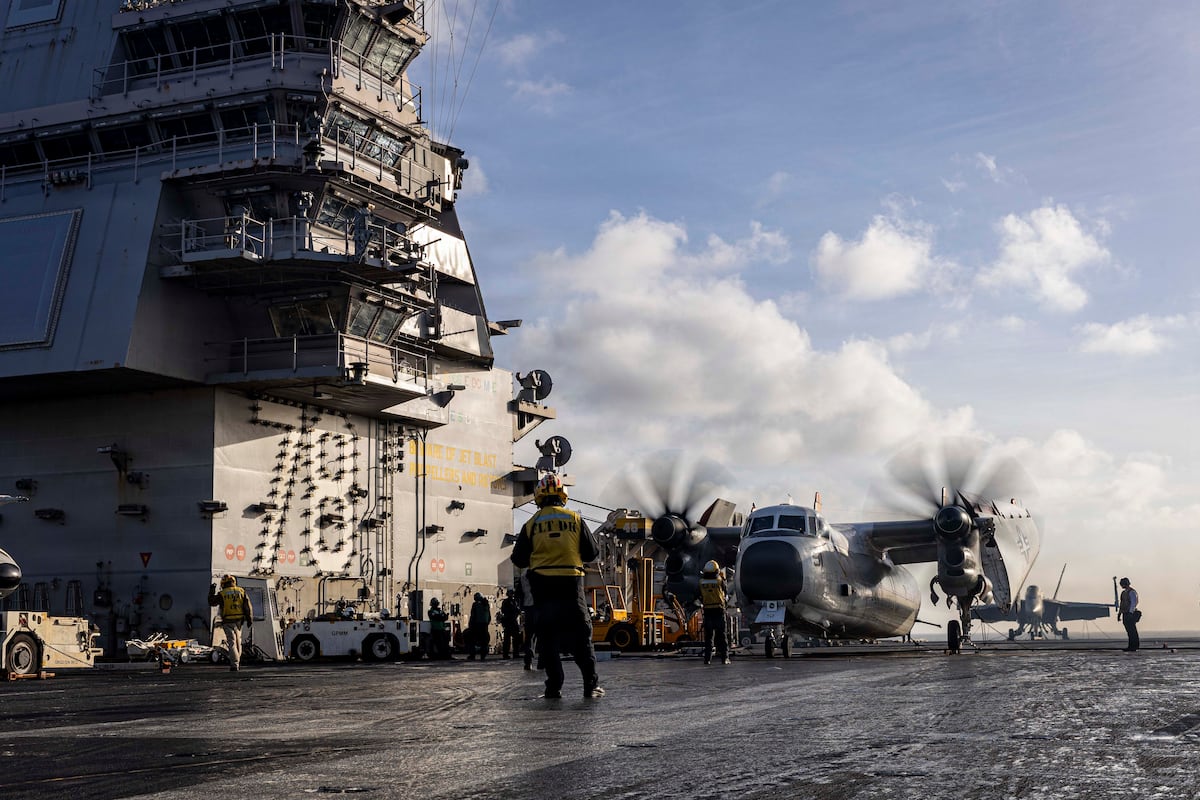
Caption: Flight operations aboard USS Gerald R. Ford during deployment | Credits: PO1 Jordan Crouch/U.S. Navy
Geopolitical impact: Signaling, readiness, and strategic trade‑offs
The extended deployment of the Gerald R. Ford carried multiple geopolitical effects. First, it provided an unmistakable forward signal to regional adversaries—particularly Iran—of persistent U.S. naval capability and willingness to sustain high‑tempo maritime operations. That deterrent value, however, came with trade‑offs: prolonged deployments increase wear on a flagship platform and elevate risk of mishaps that can undermine both operational effectiveness and public confidence. The fire and systemic maintenance issues aboard the Ford underscore vulnerabilities that adversaries and allies alike monitor; such incidents can erode perceived reliability of high‑visibility assets even as those assets remain potent political instruments.
Second, the sortie illustrates resource and scheduling pressure across the carrier enterprise. With future carriers delayed and a limited number of nuclear supercarriers available for continuous global presence, commanders face tougher choices about rotation lengths, maintenance pacing, and reliance on allied repair facilities—as the Ford’s stops in Greece and Croatia demonstrate. Diplomatically, these port visits reinforce interoperability with NATO and partner states, yet they also highlight the geographic reach required to keep advanced platforms mission‑capable far from home.
Finally, the human and institutional impacts merit strategic attention. Extended sea time, coupled with degraded living conditions during incidents, affects morale and retention—factors that ultimately shape force readiness. At the policy level, lawmakers and defense planners will likely use this deployment as evidence in debates over shipbuilding cadence, depot maintenance investment, and the balance between presence operations and surge readiness. In sum, the Ford’s long deployment delivered short‑term deterrence and alliance reassurance while exposing systemic stresses that must be addressed to sustain carrier‑centric strategy into the coming decade.